
Own your grocery ecommerce channel
Meet on-demand grocery needs with purpose-built precision. Keep shelves stocked, cut waste, and ensure faster delivery — driving efficiency, profitability, and customer loyalty.
Take control of your digital grocery business
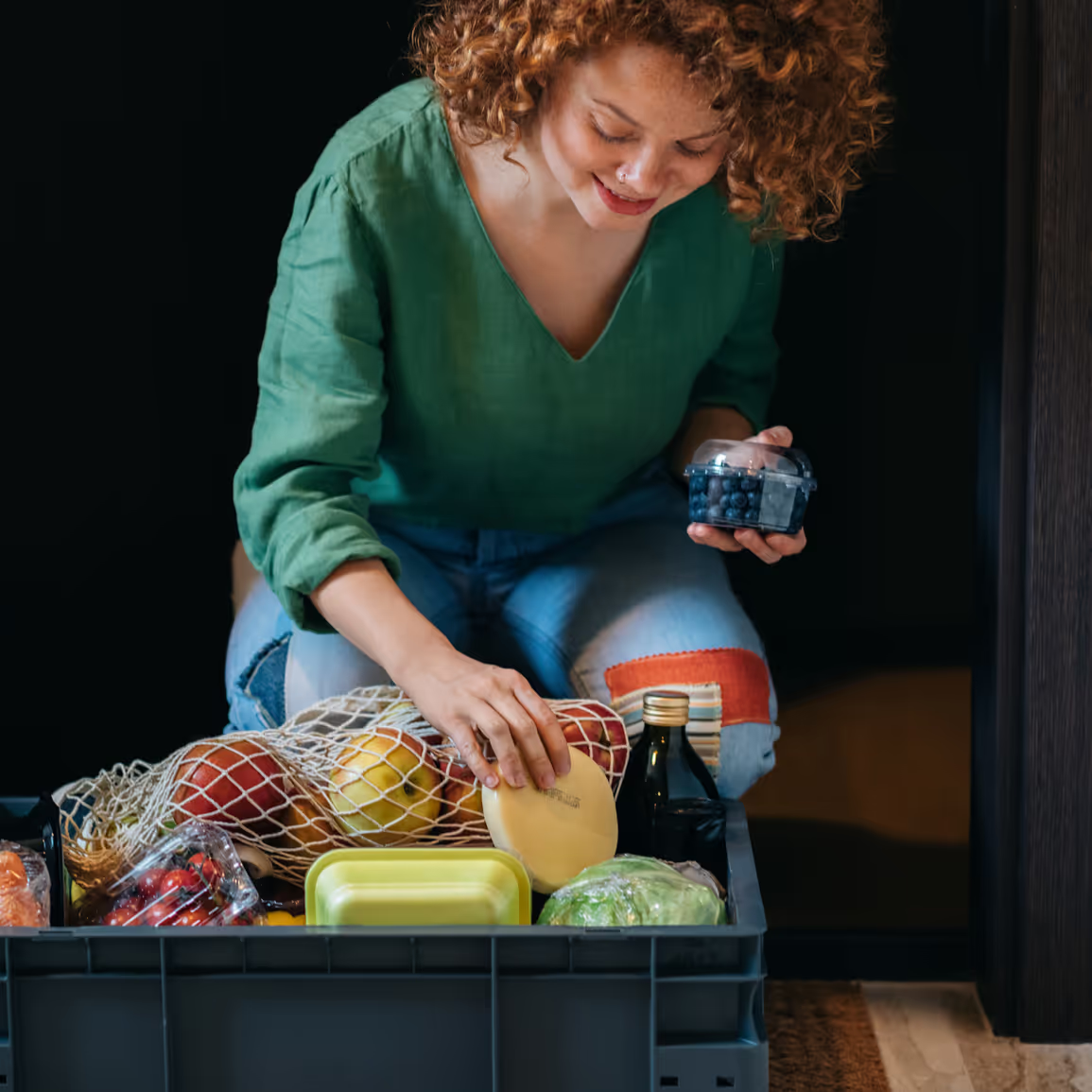
Traditional delivery platforms cut into your profits and interfere with building strong customer connections. OrderGrid helps you reclaim control with a custom-branded service that keeps revenue, data, and loyalty in your hands.
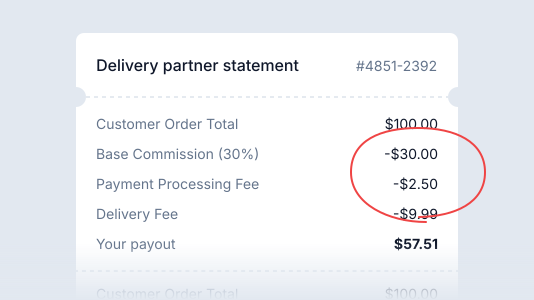
Third-party platforms
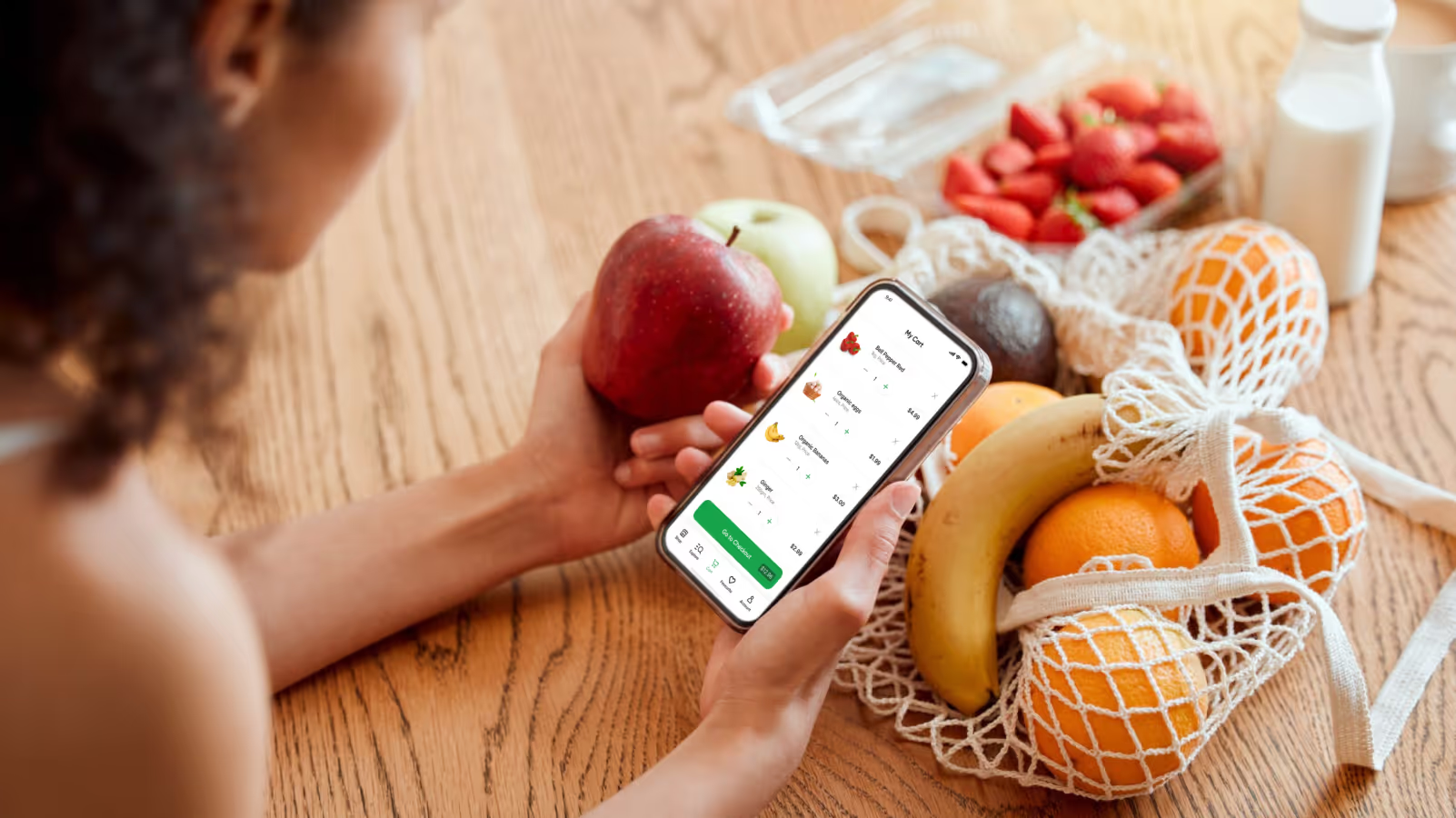
Your OrderGrid solution
Fulfill more grocery orders faster – less effort
Pick and pack orders in minutes—not hours—with AI tools that optimize picking, replenishment and putaway. Reduce errors, boost productivity, and streamline workflows.
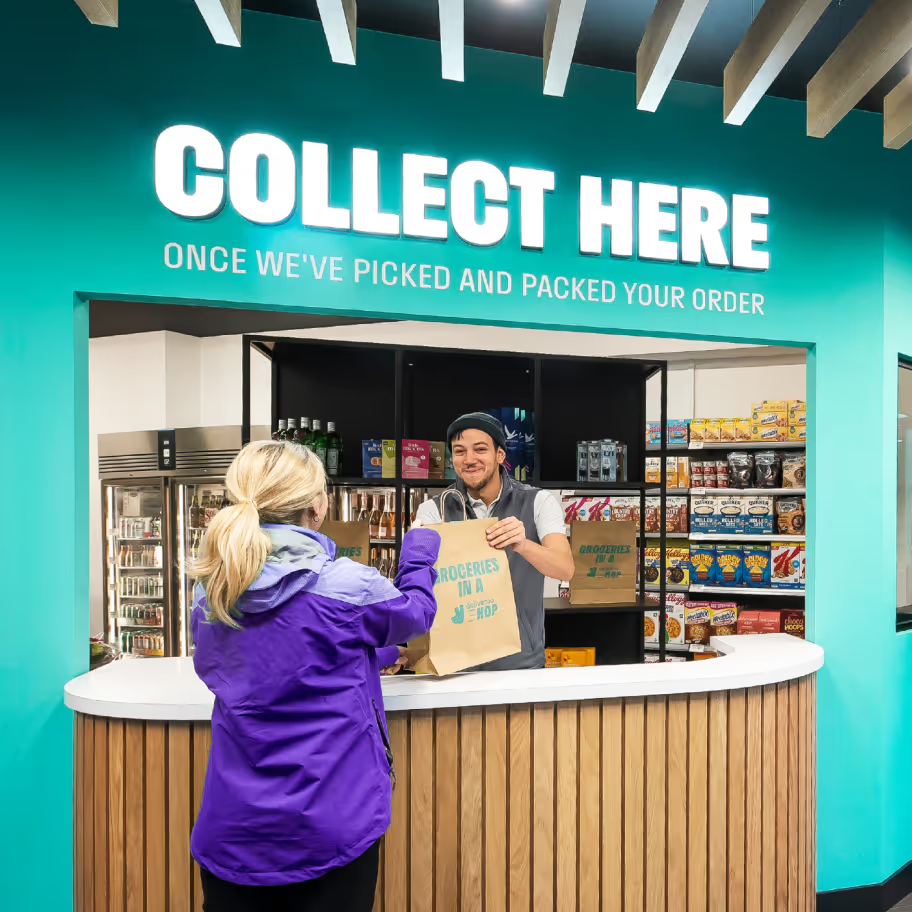
Own the grocery delivery experience
Take full control of your inventory and fulfillment process to deliver exactly what customers need, when they need it—removing third party reliance and reducing acquisition costs.
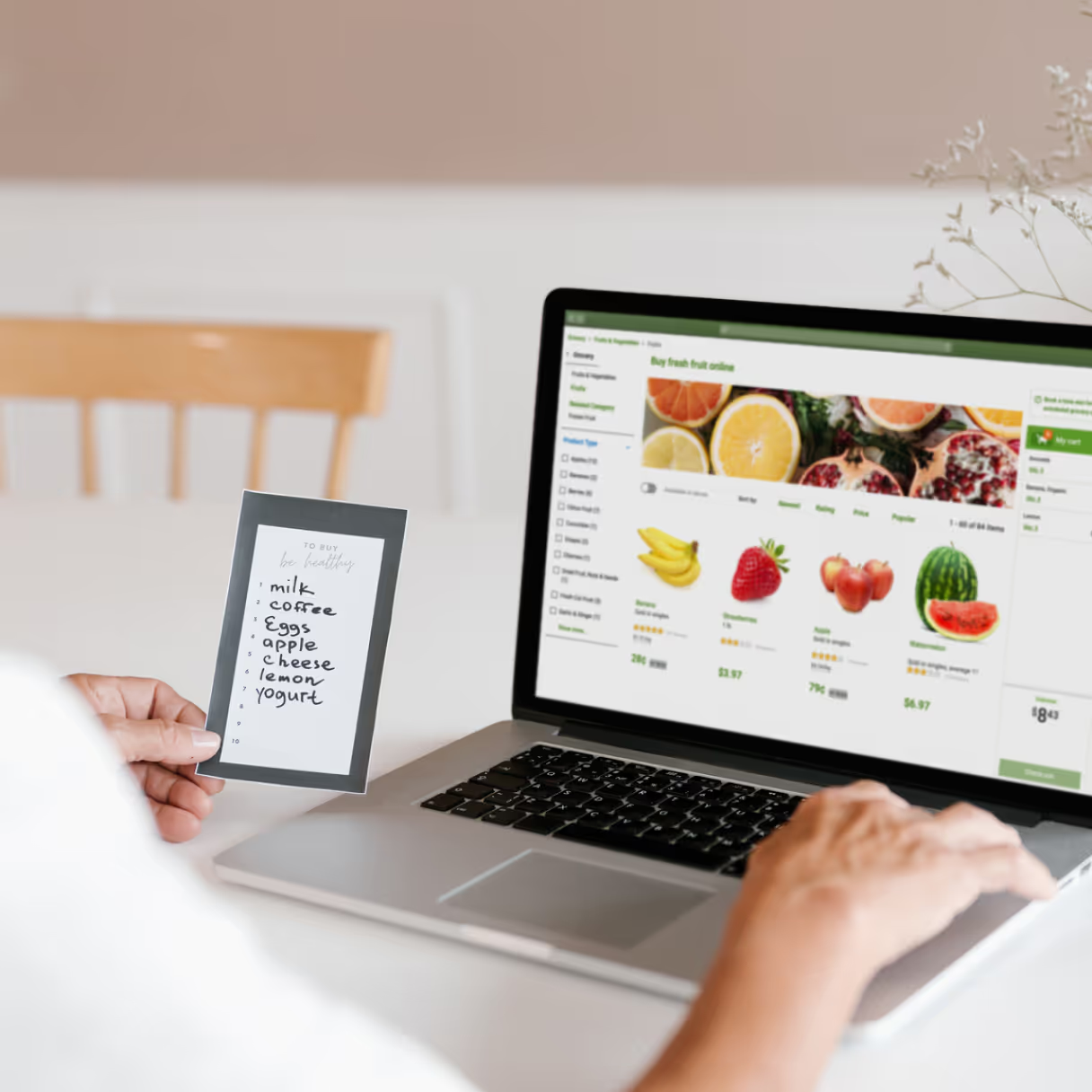
Expand operations with confidence
Meet rising demand without delays using seamless integration to scale on-demand fulfillment, reduce errors, and ensure smooth, efficient operations.
Minimize waste, maximize freshness
AI-driven forecasting helps you stock smarter, reducing spoilage while maintaining product quality. Build sustainability into every step of your supply chain.
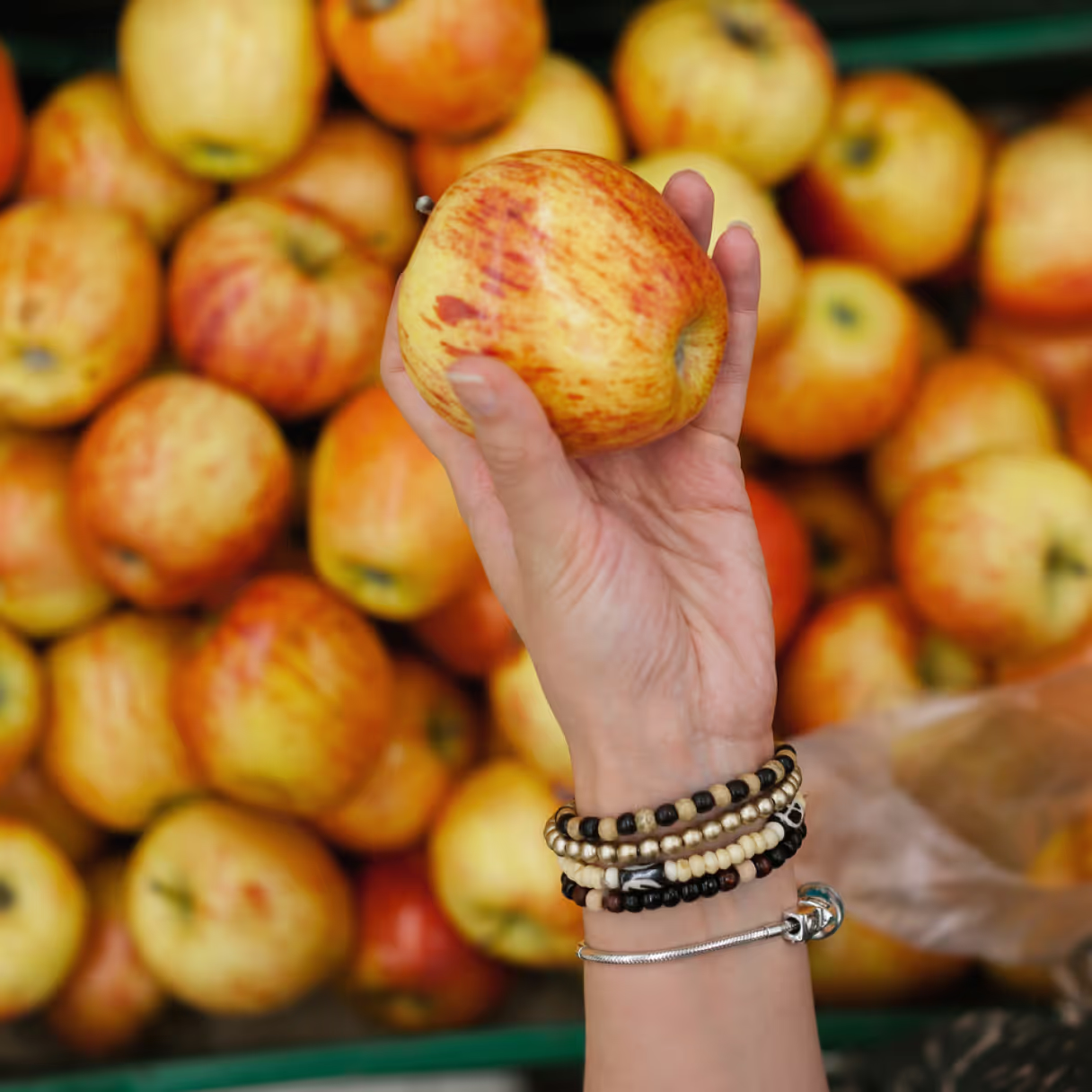
Turn fulfillment into a growth driver
Make every SKU count. Reduce errors, increase product availability, and ensure seamless fulfillment to drive sales and grow customer loyalty.

OrderGrid’s impact by the numbers
Pick speed
Pick 30 item orders in less than
Item availablity
Deliver inventory accuracy over
Reduce waste
Waste is less than
Order value
Increase order value by
Real results: How grocers succeed with OrderGrid




.avif)
Fully operational in 90 days

Identify an empty portion of your store or warehouse to use as the rapid / grocery operation
Configure store shelving and bins; set up handheld devices, monitors, and receipt printers
Deliver training to staff members and stock build with initial inventory
Allow staff to replenish stock during unexpected highs, while POS integration keeps records accurate
Notify staff of order and pick items in optimal route to reduce total pick time
Route staff to pack station, finalize order, and print receipt for dispatch
Optimize, automate, and accelerate,
all in one platform


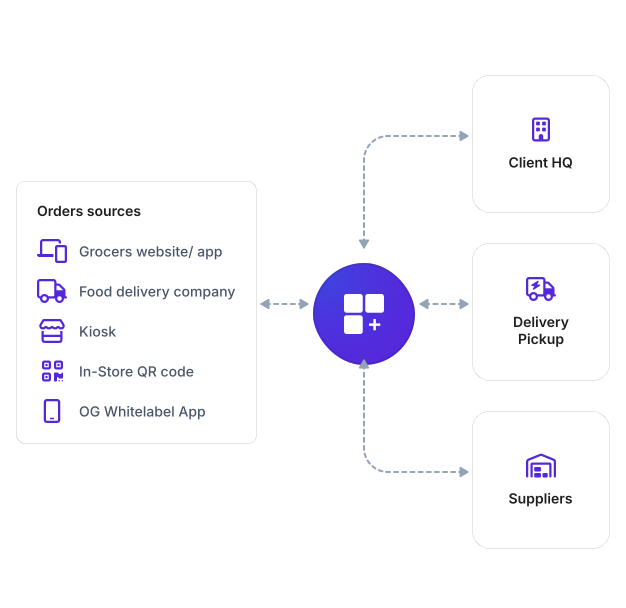
Multiple order sources
Accept orders via your app, third-party delivery apps, in-store kiosks and QR codes, or our white-label app.


Real-time inventory management
Live inventory data enables fast fulfillment and precise automatic replenishment in real time.
%201.svg)
%201-1.svg)
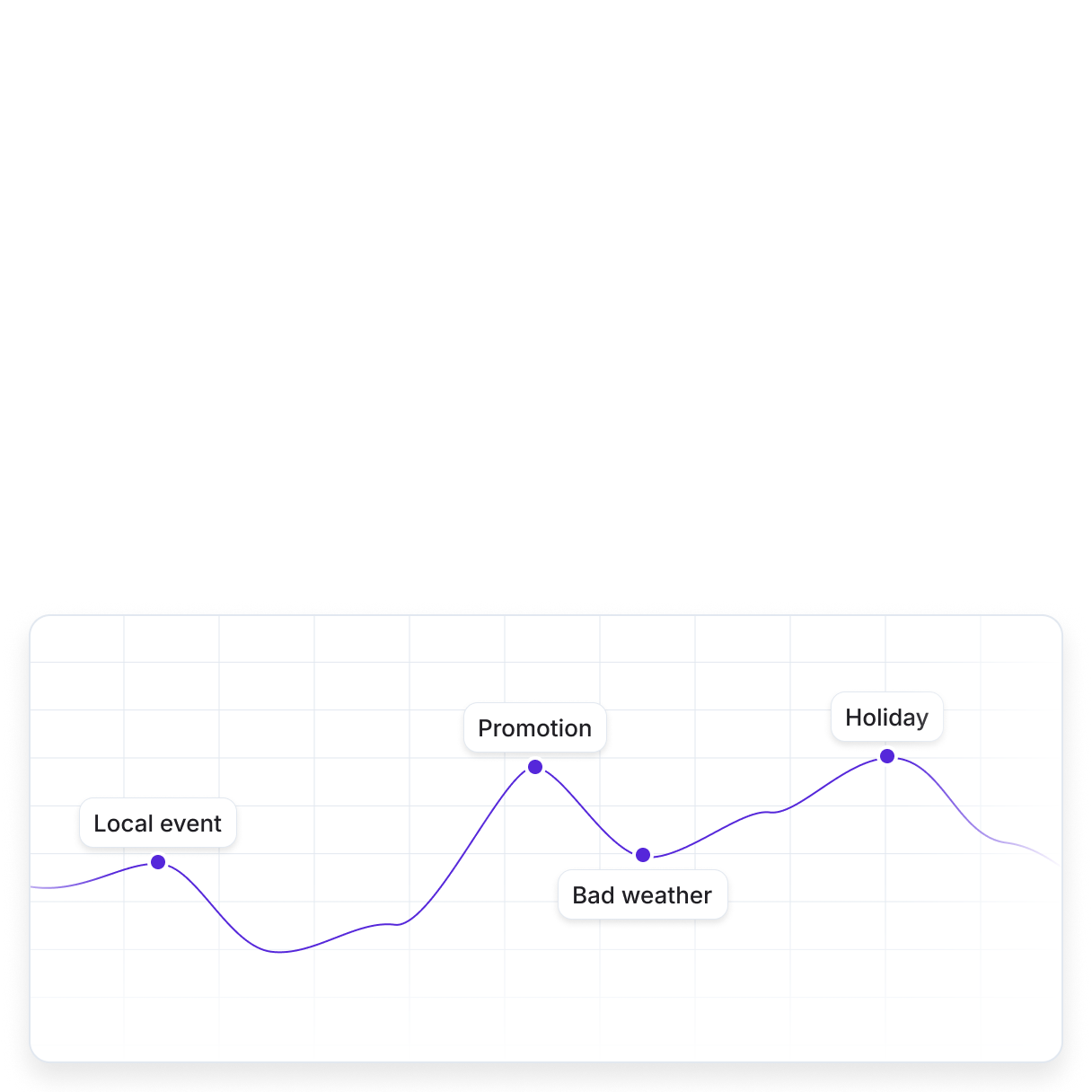
Automated smart replenishment
AI-driven demand forecasting optimizes inventory levels, reduces waste, and streamlines replenishment.


AI space optimization
Use AI to optimize site layouts and streamline inventory flow for maximum space efficiency.


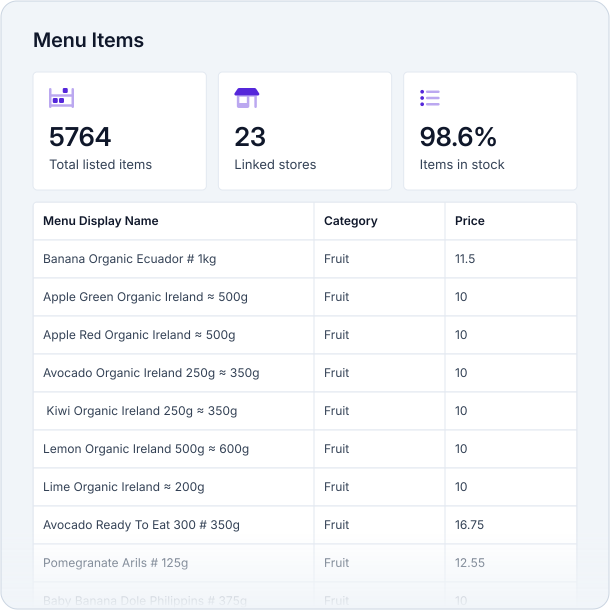
Menu management
Sync real-time inventory with dynamic menus and pricing with seamless collaboration across departments.


Site labor optimization
Achieve rapid receiving, guided picking, and efficient freshness and compliance checks with minimal training.


Supplier collaboration portal
Streamline supplier communication with easy catalog updates, PO placement, and goods reconciliation.


APIs & integration portal
Easily connect OrderGrid to your POS and ERP systems, enabling secure, seamless data integration.


Reporting & analytics
Generate actionable insights on inventory turnover, sales trends, and supplier performance.
Frequently asked questions
Still have questions?
Email —info@ordergrid.com
A grocery fulfillment platform is the operational layer between an online order and a completed delivery or pickup. It orchestrates picking, packing, quality checks, and dispatch, handling the complexity that makes grocery fulfillment harder than general ecommerce: perishable products, multi-temperature handling, substitution logic, and tight delivery windows.
Without a dedicated fulfillment platform, grocers rely on bolt-on modules or manual processes that break down as order volume scales. Perishable inventory shifts continuously, expiry dates require prioritization at the picking step, and substitution rules need real-time inventory visibility to suggest replacements before the customer is notified. General ecommerce platforms typically lack the grocery-specific logic for these workflows, leaving grocers to layer custom code or accept fulfillment errors that erode customer trust.
OrderGrid powers grocery fulfillment with purpose-built logic for food retail, coordinating order receipt to dispatch with expiry-aware picking, multi-temperature handling, and continuous order routing, processing fulfillment fast enough to support sub-30-minute quick commerce windows.
Core delivery management software features include multi-channel order intake, live order tracking for customers, batch and wave picking coordination, courier assignment, and delivery window management. For grocery specifically, look for temperature-zone handling across fresh, frozen, and ambient products, plus substitution rules for out-of-stock items.
Expiry-aware picking logic that prioritizes shorter-dated products is essential for fresh-food fulfillment, where stock turns within hours. The ability to handle both rapid delivery and scheduled pickup from one interface matters because grocers run multiple delivery speed tiers simultaneously. Multi-channel order intake from the grocer's own app, aggregator channels, and in-store kiosks should flow into a single queue rather than maintaining separate dispatch workflows for each source.
OrderGrid delivers these features in one system, with grocery-specific picking routing built for speed and the platform designed for greater than 99.5% item accuracy, plus higher average order values on owned channels compared to aggregator-dependent models.
Grocery delivery software falls into three broad categories. Aggregator-based systems route grocery orders through third-party marketplace platforms, where the grocer surrenders margin, customer data, and branding control. Storefront-only tools provide a branded ordering interface but leave fulfillment coordination, picking, and dispatch to separate systems or manual processes.
Unified operations platforms handle the full cycle from order intake through fulfillment and delivery in one system, removing the data handoff points that fragment workflows in aggregator-based and storefront-only models. The choice between approaches comes down to control versus simplicity: aggregator marketplaces minimize setup but concede margin and customer relationships, storefront-only tools preserve branding but leave operational gaps, and unified operations platforms require deeper deployment but consolidate the full grocery delivery workflow under one operational layer.
OrderGrid handles the full cycle as a unified operations platform: order intake from multiple sources, fulfillment coordination with grocery-specific picking logic, and dispatch to couriers or customer pickup, eliminating gaps between storefront, operations, and fulfillment.
Quick commerce is the delivery model that promises fulfillment in 15 to 30 minutes from order placement. It applies to grocery through smaller, curated assortments fulfilled from locations close to the customer, whether those are dedicated fulfillment points or sections within existing stores.
The operational requirement is speed at every step: order receipt, picking, packing, and handoff to a courier, with no manual bottlenecks or system delays between stages. For grocers, quick commerce is not a separate business model but a fulfillment speed tier running alongside standard delivery and pickup. The same fulfillment engine handles 15-minute rapid orders and 2-hour scheduled deliveries from one queue, routing each order to the right picking workflow and dispatch path based on its delivery window.
OrderGrid supports quick commerce workflows by coordinating rapid picking, continuous order routing, and immediate dispatch, with the platform built to serve sub-30-minute fulfillment windows at the accuracy and speed that quick commerce demands.
Online grocery shopping software typically combines ecommerce storefronts, order management systems, and fulfillment tools. Grocery retailers either assemble this stack from multiple vendors (one for the storefront, another for order routing, a third for picking and packing, and a fourth for delivery dispatch) or use a single platform that handles the entire flow.
The assembled approach creates data handoff points between systems where information lags, errors propagate, and integration costs accumulate over time. The single-platform approach eliminates these handoffs: order intake, inventory, picking, packing, and dispatch operate in one data layer. The trade-off is configurability versus operational simplicity, with grocery-specific platforms often outperforming general ecommerce tools that have been adapted for food retail workflows.
OrderGrid runs the full grocery ecommerce operational stack in one system, handling fresh, frozen, and ambient categories with grocery-specific logic for expiry, lot tracking, and multi-temperature coordination rather than adapting general ecommerce software to food retail.
Grocery ecommerce is shifting in three directions. First, grocers are moving from pure aggregator dependence toward owned channels that retain margin and customer data. Second, fulfillment windows are compressing: customers now expect same-day or sub-hour delivery, which demands operational systems that update continuously rather than syncing on a schedule.
Third, grocery operations are consolidating onto fewer platforms, as retailers find that running separate systems for storefronts, picking, and delivery creates handoff delays that erode customer satisfaction. These shifts compound: an owned channel exposes the operational gaps that aggregator marketplaces previously concealed, faster delivery windows expose batch-sync limitations in legacy systems, and consolidation pressure forces grocers to evaluate single-platform alternatives to multi-vendor stacks.
OrderGrid addresses all three shifts. Grocers can run their own branded channel with fulfillment coordination that updates as orders flow in, serving customers through multiple channels from one operational system.
Grocers should evaluate ecommerce platforms on three criteria: grocery-native operational logic, multi-channel order intake, and depth of fulfillment capability behind the storefront. A platform that handles the storefront but disconnects from picking, packing, and delivery creates integration gaps that slow fulfillment and introduce errors.
Multi-channel support matters because grocery orders come from the grocer's own app, aggregator feeds, kiosks, and QR codes simultaneously. Look for expiry-aware product handling, multi-temperature category support, and the ability to route orders across delivery and pickup workflows from one interface. Pre-built integrations to point-of-sale and ERP systems reduce deployment time and let grocers add fulfillment capability without ripping out the existing technology stack.
OrderGrid covers storefront, order management, and fulfillment as an ecommerce solution for grocery in one platform, with pre-built integrations to NCR, SAP, Oracle, and Dynamics supporting regional chains through enterprise-scale operations.
An on-demand grocery app lets customers order groceries for rapid delivery or scheduled pickup through a mobile interface. For the retailer, the app is the customer-facing layer of a larger operational system that coordinates order intake, inventory checks, picking, packing, and dispatch.
The speed promise of an on-demand grocery app only holds if the back-end fulfillment engine can match it. Storefronts that promise fast delivery without operational systems behind them create order acknowledgements they cannot fulfill, leading to late deliveries, substitution errors, and churn. The app, the inventory data, the picking workflow, and the dispatch routing all need to operate as one system, with each step triggering the next in real time rather than running on batched updates.
OrderGrid powers on-demand grocery apps as white-label solutions where the grocer owns the brand, the customer data, and the delivery experience, with the fulfillment engine coordinating picking, packing, and dispatch at speeds that support sub-30-minute delivery windows.
Yes. Grocers can own their delivery channel through branded ecommerce and fulfillment software instead of relying on third-party aggregator platforms. Aggregator marketplaces charge 15 to 30 percent per transaction, control the customer relationship, and limit grocers' access to shopper data.
A grocer-owned channel retains margin, builds direct customer loyalty, and provides full visibility into order and fulfillment performance. Owned channels also let grocers control assortment, pricing, promotions, and the post-purchase experience, which aggregator marketplaces fragment across multiple branded interfaces. The trade-off is operational: running an owned channel requires fulfillment software that handles order intake, picking, packing, and dispatch without forcing grocers to assemble the stack from separate vendors.
With OrderGrid, grocers launch their own branded app and website while the platform handles order intake, fulfillment, and dispatch. The white-label solution scales from independent grocers to mid-market chains, with deployment in as few as 90 days and no aggregator commissions on owned-channel orders.
Grocery ecommerce software spans storefronts, order management, fulfillment coordination, and delivery logistics. Options range from general-purpose ecommerce tools adapted for grocery to purpose-built platforms designed around the specific requirements of food retail, including perishable categories, expiry management, and multi-temperature handling.
The key distinction is whether the software treats grocery as a configuration of a general product or was architected from the start for food categories. Grocery-native platforms handle expiry-aware picking, lot tracking, and temperature-zone routing across fresh, frozen, and ambient products. General-purpose ecommerce tools typically require workarounds for these workflows, which slows fulfillment and creates waste in perishable categories where stock turns within days or hours.
OrderGrid handles grocery ecommerce with purpose-built logic for food retail operations, covering fresh, frozen, and ambient categories with expiry-aware picking, multi-temperature coordination, and grocery-native order management in one system.
Yes. Most grocery delivery software offers integration through APIs and pre-built connectors that link to existing point-of-sale terminals, ERP systems, and ecommerce storefronts. Integration depth varies: some delivery layers share live data with the rest of the operation, others run as separate silos that sync on a schedule.
Live data flow matters because grocery orders move fast and inventory shifts continuously. A scheduled sync risks selling out-of-stock items, picking against stale counts, or routing orders to channels that no longer have capacity. Pre-built connectors to point-of-sale, ERP, and ecommerce systems reduce integration time and let grocers add a delivery layer without replacing the existing technology stack.
OrderGrid provides pre-built integrations with NCR, SAP, Oracle, and Dynamics, connecting delivery operations directly to existing systems. Data flows continuously between the POS, fulfillment layer, and delivery channel, with most deployments live within 90 days.
Online grocery and food delivery platforms combine order intake, fulfillment coordination, and dispatch into one operational layer. They accept orders from a grocer's own app, aggregator marketplaces, kiosks, and QR codes, then route each order through picking, packing, and delivery or pickup.
The category spans standalone storefront tools, aggregator-embedded systems, and unified platforms that handle the full cycle. Standalone tools cover storefronts only and leave fulfillment to separate systems or manual processes. Aggregator-embedded systems route orders through third-party marketplaces, where the grocer surrenders margin and customer data. Single-platform models handle order intake, fulfillment, and dispatch in one operation, removing handoff points between storefront, picking, and delivery.
With OrderGrid, grocers run order intake, fulfillment, and dispatch as one operation rather than stitching separate tools together. The platform is designed for greater than 99.5% item accuracy and sub-30-minute fulfillment windows, with deployment in as few as 90 days.
Make your grocery inventory work harder
The tools you need to reduce waste and boost revenue are here.