

Omnichannel order fulfillment software for grocery
Manage owned, marketplace, and aggregator orders from a single queue. Multichannel order management with automated routing based on location, capacity, and SLA. One system, every channel.
.avif)


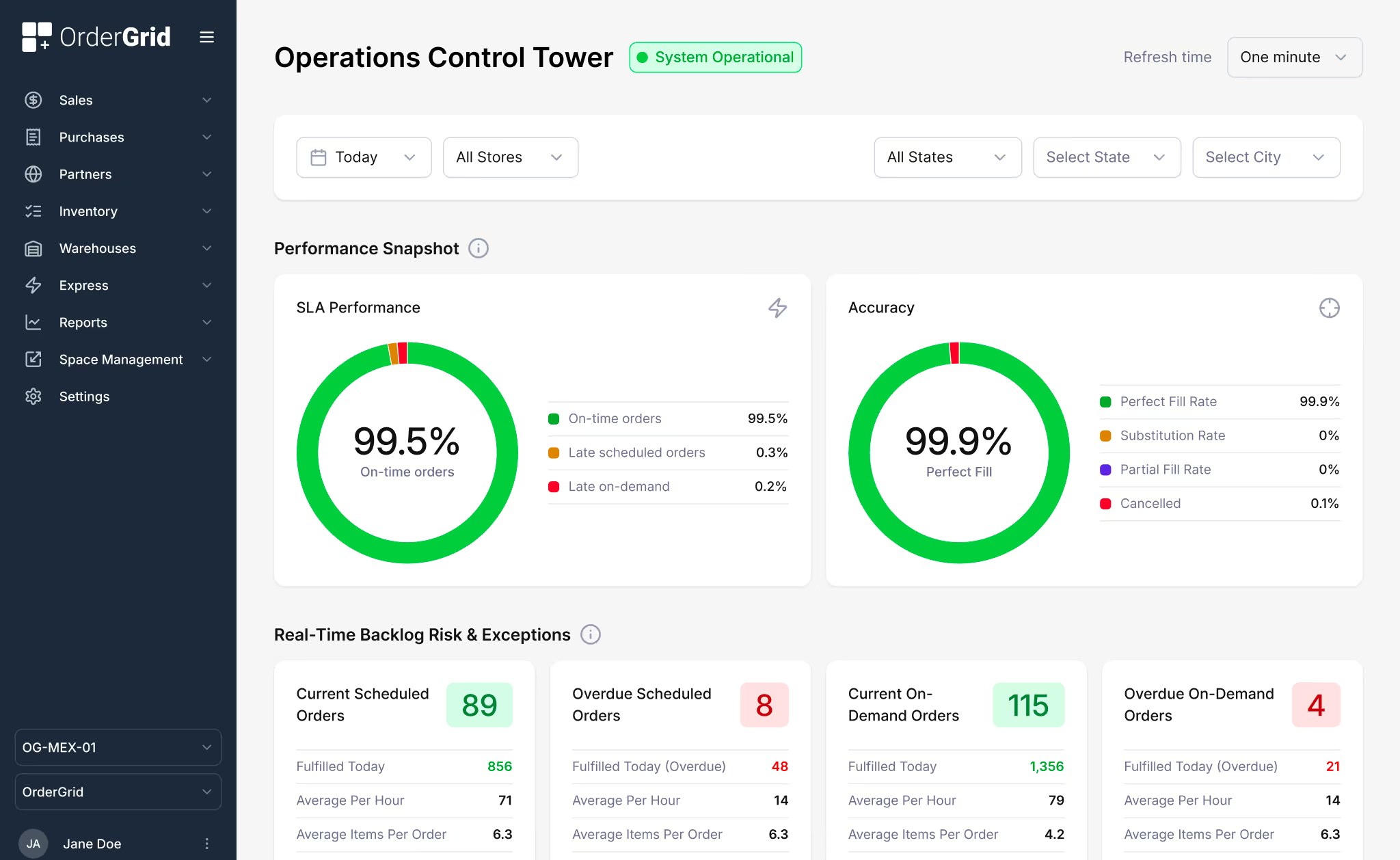
Make every order an operational win
OrderGrid brings precision to high-volume fulfillment, coordinating orders, teams, and timelines across your entire network with speed and control.
Order automation
Automate order workflows
Response time
Speed issue handling by up to
Labor optimization
Reduce manual effort by up to
Fulfillment efficiency
Reduce cost per order by up to
Connect every channel in your fulfillment network
Balance speed, scale, and accuracy with smarter workflows and sharper decisions—no matter how many channels, orders, or changes come your way.
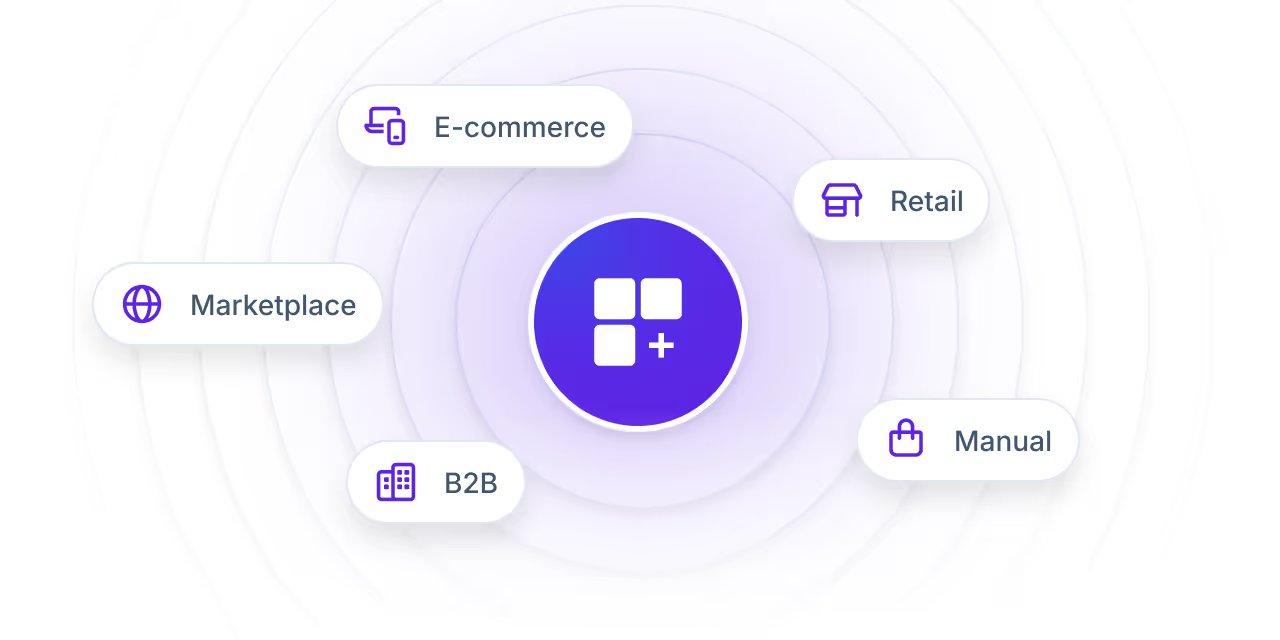
Unify every order channel into one fulfillment queue
Break down silos with normalized order input from every source: ecommerce, wholesale, in-store, marketplace, and aggregator. Fewer gaps, faster decisions, consistent fulfillment everywhere you operate.

Automate fulfillment decisions at the right time, every time
Use SLAs, stock availability and business rules to automatically route, assign, and update orders. Orders move where they should, without manual workarounds or delays.
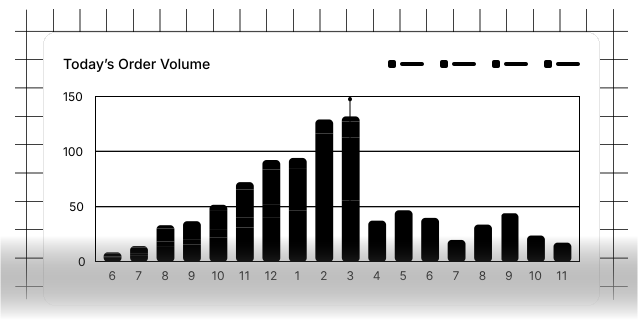
Stay ahead with live operational oversight at scale
Track orders, tasks, and exceptions as they happen. Centralized oversight puts you in control of performance, timelines, and throughput—across every location.
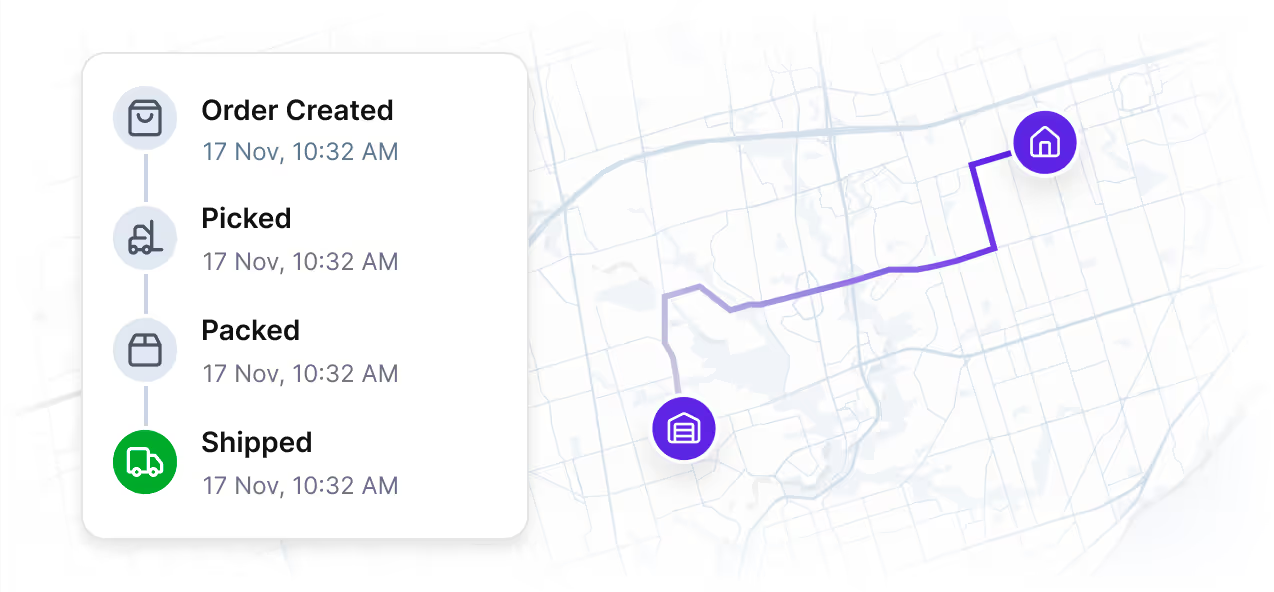
Coordinate the final mile without compromise
Connect upstream fulfillment to downstream delivery without delay. From staging to dispatch, ensure every action is synced, traceable, and optimized for customer experience.
Build the backbone for high-performance operations


Omnichannel order intake
Ingest orders from any source without added complexity. Our source-agnostic architecture ensures every order flows into a unified, normalized stream.


Agentic order handling
Automatically create, update, or reroute orders using built-in logic and smart automation. Orders move through the system without human intervention, reducing manual effort and delays.


Smart resource assignment
Dynamically allocate orders to the right warehouse, pack line, or team based on stock levels, capacity, or SLA. Ensure the most efficient path to fulfillment—no manual triage required.


Event-driven visibility
Leverage real-time callbacks and event triggers to monitor pickup, staging, or failed delivery attempts. Know exactly where orders are—and what’s next.


Control tower
Track orders, timelines, and exceptions in real time with a centralized view. Identify bottlenecks, surface stuck orders, and resolve issues before they impact downstream service.


Task management engine
Tie fulfillment tasks to order data, assigning and sequencing work across users, roles, and locations. No sticky notes, no spreadsheets—just synchronized execution.


AI-powered planner
Replenish, order, or take action instantly with a smart, multilingual chat interface. Plan faster, reduce errors, and manage workflows without jumping between tabs.


Multi-mode support
Handle scheduled, recurring, or instant orders side by side with no configuration hassle. Fulfillment logic flexes to match how you sell, not the other way around.


Service command center
Give agents a complete picture of each order—status, timelines, tasks, and SLA insights—so they can resolve issues fast and with context.
Frequently asked questions
Still have questions?
Email — info@ordergrid.com
A strong distributed order management system should include intelligent order routing that evaluates every fulfillment node before assigning each order. Core features include configurable routing rules based on cost, proximity, and SLA, inventory visibility across all locations, and the ability to handle split shipments when no single location can fulfill a complete order.
Scalability matters: the system should perform under peak order volumes without manual intervention or degraded routing quality. For grocery retailers, also prioritize expiry-aware allocation, cold-chain routing logic, and support for hybrid fulfillment models that blend store-pick, warehouse-ship, and aggregator dispatch within the same order flow and inventory pool.
With OrderGrid, food retailers configure grocery-native routing rules across every fulfillment location in their network, with logic built for perishable and multi-temperature operations.
A retail order management system (OMS) is software that manages the full lifecycle of a customer order, from placement through fulfillment, delivery, and post-purchase service. It connects all sales channels, inventory locations, and fulfillment methods into one coordinated system, giving operations teams a complete view of every order.
For grocery and food retailers operating across multiple store formats, online channels, and aggregator partnerships, the OMS must handle the added complexity of perishable stock, time-sensitive dispatch, and location-specific product assortments. General-purpose retail OMS platforms often lack the category-level inventory logic that fresh, frozen, and ambient grocery operations demand.
OrderGrid powers retail order management for grocers with a platform proven at enterprise scale, including live deployments processing high-volume fulfillment daily.
The most important features in a multichannel OMS are centralized order intake across all channels, automated routing based on location and inventory, status visibility for every active order, and exception handling for modifications or cancellations. These capabilities form the baseline for any system managing orders across more than one sales channel.
Beyond the baseline, look for native multi-location support, rules-based fulfillment logic that operators can configure without developer involvement, and a control tower view that surfaces stuck or delayed orders before they affect customers. A strong multichannel order management system for grocery should also support time-window fulfillment scheduling and aggregator-specific order formatting.
OrderGrid provides these capabilities in a single grocery-native platform, with operators managing fulfillment rules directly rather than waiting on development cycles.
The best order management software for retail centralizes order intake, automates fulfillment decisions, and provides live operational visibility across every location and channel. It goes beyond basic order tracking by integrating store-level operations, warehouse fulfillment, and third-party logistics into a coordinated workflow.
For grocery and food retailers, the strongest platforms support expiry-aware stock allocation, temperature-sensitive routing rules, and the high order volumes that come with aggregator and marketplace channels. The system should treat every store and warehouse as a potential fulfillment node, assigning orders based on real-time stock position rather than static routing tables.
OrderGrid powers order management for grocery retailers through a purpose-built platform with pre-built integrations to major POS, ERP, and aggregator systems.
Distributed order management solutions differ primarily in how they handle order routing logic, inventory visibility across fulfillment nodes, and integration complexity. Legacy enterprise DOM platforms typically require months of implementation and heavy customization, while newer purpose-built platforms offer faster deployment, pre-configured routing rules, and native support for specific retail verticals.
For grocery retailers, the most relevant comparison criteria are multi-location fulfillment coordination, the ability to balance aggregator and owned-channel orders within a single system, and total time to go live. Grocery-specific requirements like perishable routing and temperature-zone logic often separate platforms designed for food retail from those adapted from general supply chain software.
With OrderGrid, grocery retailers deploy distributed order management in 90 days, routing orders across every fulfillment location without enterprise-scale IT projects.
The best omnichannel order fulfillment software unifies every order source into a single system and routes fulfillment decisions based on current conditions rather than batch updates. Key capabilities include automated order allocation, multi-location inventory awareness, and the ability to shift fulfillment between stores and warehouses dynamically.
For grocery retailers, the software must handle aggregator-specific SLAs, high-frequency order volumes during peak trading periods, and the coordination required when store-pick, warehouse-ship, and aggregator dispatch models run simultaneously. The system should resolve competing demands on the same inventory pool without manual intervention, especially during promotional windows when order density spikes.
OrderGrid handles omnichannel order fulfillment for grocery and food retailers through a platform that manages owned, marketplace, and aggregator channels from one operational view.
Start by mapping your current channel mix: owned ecommerce, marketplaces, aggregator partnerships, and any wholesale channels. The right multichannel OMS should normalize orders from all sources without requiring custom integrations for each one, and it should handle inventory synchronization, automated routing, and exception management natively.
For grocery and food retail, evaluate native support for expiry-aware inventory, temperature-controlled fulfillment rules, and pre-built connections to major aggregator platforms and POS systems. The right multichannel order management system should also go live quickly alongside existing infrastructure, since enterprise-tier alternatives typically require 18 to 36 months.
With OrderGrid, grocers connect to existing POS and ERP systems out of the box, with a platform that is typically operational within 90 days.
A multichannel order management system (OMS) is software that consolidates orders arriving from multiple sales channels into one centralized platform. Instead of running separate workflows for each channel, a multichannel OMS normalizes every order into a queue with consistent data, status tracking, and fulfillment logic.
This eliminates duplicate effort, reduces errors from manual channel switching, and gives operations teams a single view of all active orders. For grocers running owned ecommerce alongside third-party delivery platforms, the OMS must also handle high order volumes and time-critical fulfillment windows where delays of even minutes affect customer satisfaction and substitution rates.
OrderGrid provides a multichannel OMS purpose-built for grocery operations, handling the order volumes and fulfillment timing that define multi-channel food retail.
The best multichannel order management systems centralize orders from every sales channel into a single processing queue, whether owned ecommerce, marketplace, or aggregator. Leading systems provide inventory synchronization across locations, automated order routing, and complete visibility so operations teams manage all channels from one view.
For grocery retailers, the critical differentiators are support for location-level stock accuracy, the ability to manage aggregator-specific fulfillment rules without custom development, and a deployment model that does not require months of enterprise integration. Systems built for general retail often lack native support for perishable inventory constraints and the high order frequency that grocery aggregator channels generate.
OrderGrid handles multichannel order management for grocery and food retailers with a platform that manages multi-channel fulfillment complexity and is typically operational within 90 days.
Distributed order management (DOM) is a fulfillment approach that routes orders across a network of warehouses, stores, and third-party locations rather than fulfilling from a single point. DOM systems use rule-based logic to select the optimal fulfillment source for each order based on inventory availability, proximity, shipping cost, and service-level requirements.
For grocery and food retail, DOM must also account for product perishability, cold-chain requirements, and stock differences across fresh, frozen, and ambient categories. The routing logic needs to factor in expiry dates, temperature zones, and location-specific assortments that general-purpose DOM platforms typically do not handle natively.
With OrderGrid, grocers treat every location as a potential fulfillment node, with routing rules that respect grocery-specific constraints like expiry dates and temperature zones.
The right distributed order management solution routes each order to the best fulfillment location by evaluating available inventory, location capacity, and delivery commitments across your entire network. Without one, orders default to a single fulfillment point regardless of whether closer or better-stocked locations exist, increasing shipping costs and delivery times.
Grocers operating across multiple store formats, warehouses, and aggregator partnerships need this capability once their fulfillment network spans more than a handful of locations. The right solution reduces split shipments, cuts fulfillment costs, and keeps delivery promises intact even during demand spikes by dynamically assigning each order to the node with the best combination of stock availability and proximity.
OrderGrid handles distributed order management for grocery retailers by connecting every store, warehouse, and aggregator channel into a single orchestration layer with configurable routing rules.
Omnichannel fulfillment is a logistics strategy that processes and delivers orders across every sales channel from a single operation. Instead of running separate workflows for ecommerce, in-store, marketplace, and aggregator orders, it consolidates all orders into one queue and routes each to the optimal fulfillment location based on proximity, stock levels, and delivery commitments.
For grocery and food retailers, omnichannel fulfillment is especially demanding because perishable inventory, time-sensitive delivery windows, and multi-aggregator complexity require continuous coordination. Orders from owned channels, third-party marketplaces, and delivery platforms must all resolve against the same real-time stock picture, or substitution rates climb and customer satisfaction drops.
OrderGrid powers omnichannel fulfillment for grocery retailers by unifying every order source into one system, with store-level and warehouse-level routing that runs without manual intervention.
Bring clarity, speed, and control to every order
From any channel to any carrier, keep operations fluid and customer promises intact.