
Run profitable dark store grocery operations
Faster picks, higher accuracy, and full operational control across every zone of your dark store fulfillment operation. Purpose-built for grocers running high-volume dark stores.
Fast. Accurate. Fresh. Without Waste.
OrderGrid equips high-performance dark stores with intelligent forecasting, space optimization, and full operational oversight. The result? More products per square meter, less waste, and faster, fresher fulfillment that scales profitably.
Order accuracy greater than
On-time dispatch rate above
Waste reduced to less than
Throughput up more than
Deliver perfect orders, every time
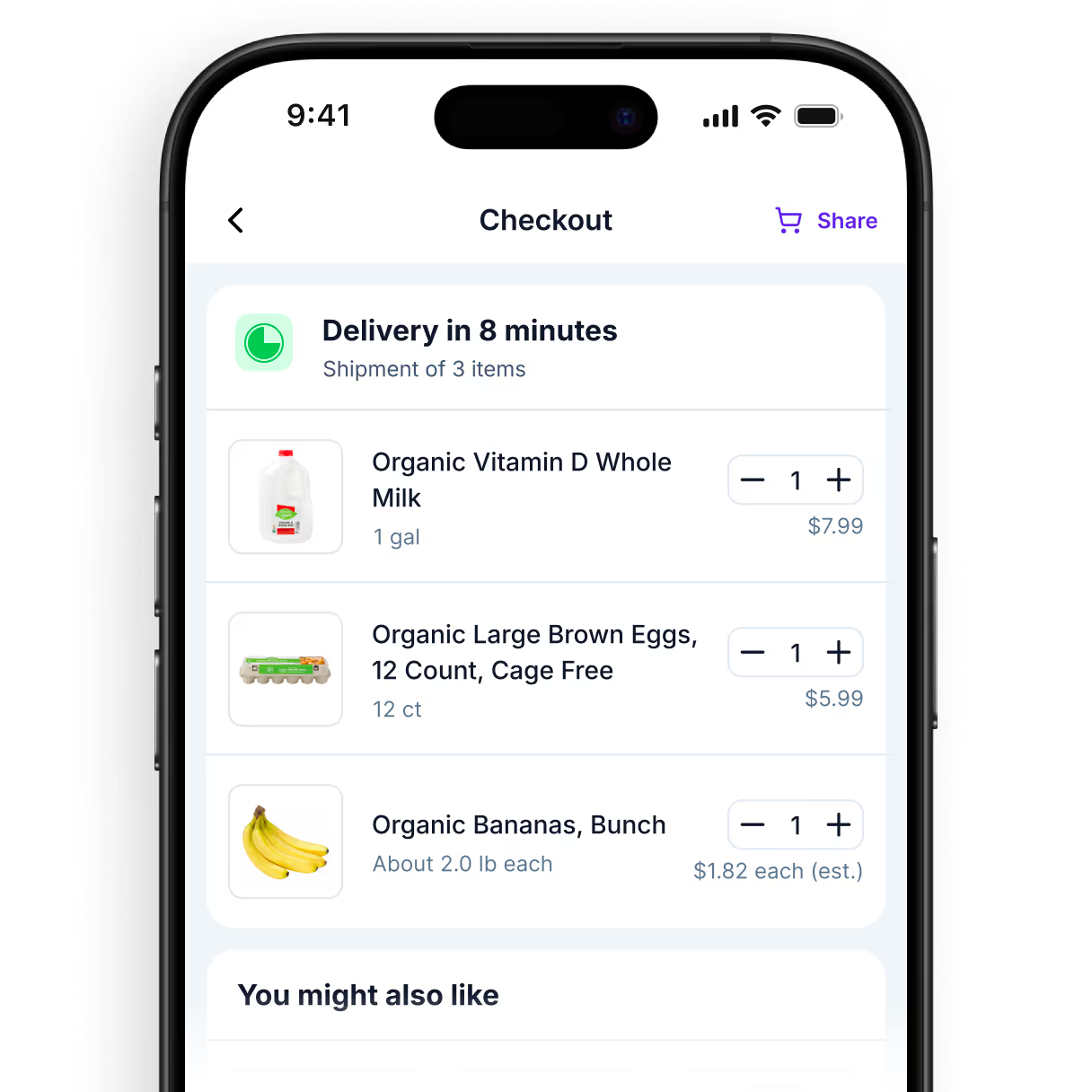
Live inventory visibility and a dedicated stock reservation system ensure what customers see is what they get — no out-of-stocks, no substitutions, no missed items. Every order fulfilled exactly as promised.

Keep products fresh and customers loyal
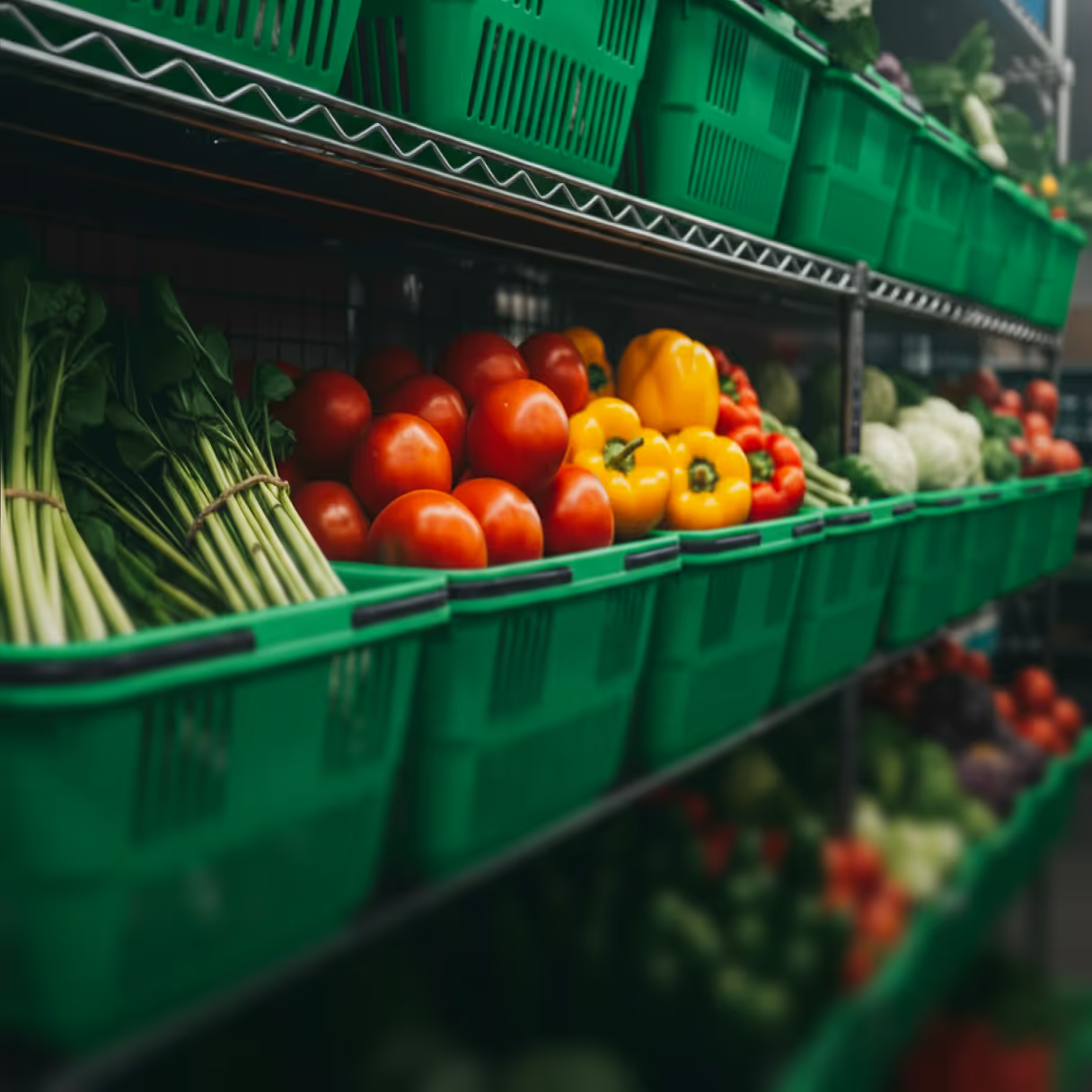
AI demand forecasting and expiry-aware workflows keep products fresh, balanced, and profitable. Automated POs, freshness checks, and rotation logic ensure your top movers always arrive with long expiry dates and minimal waste.
Fulfill on-demand orders faster than ever
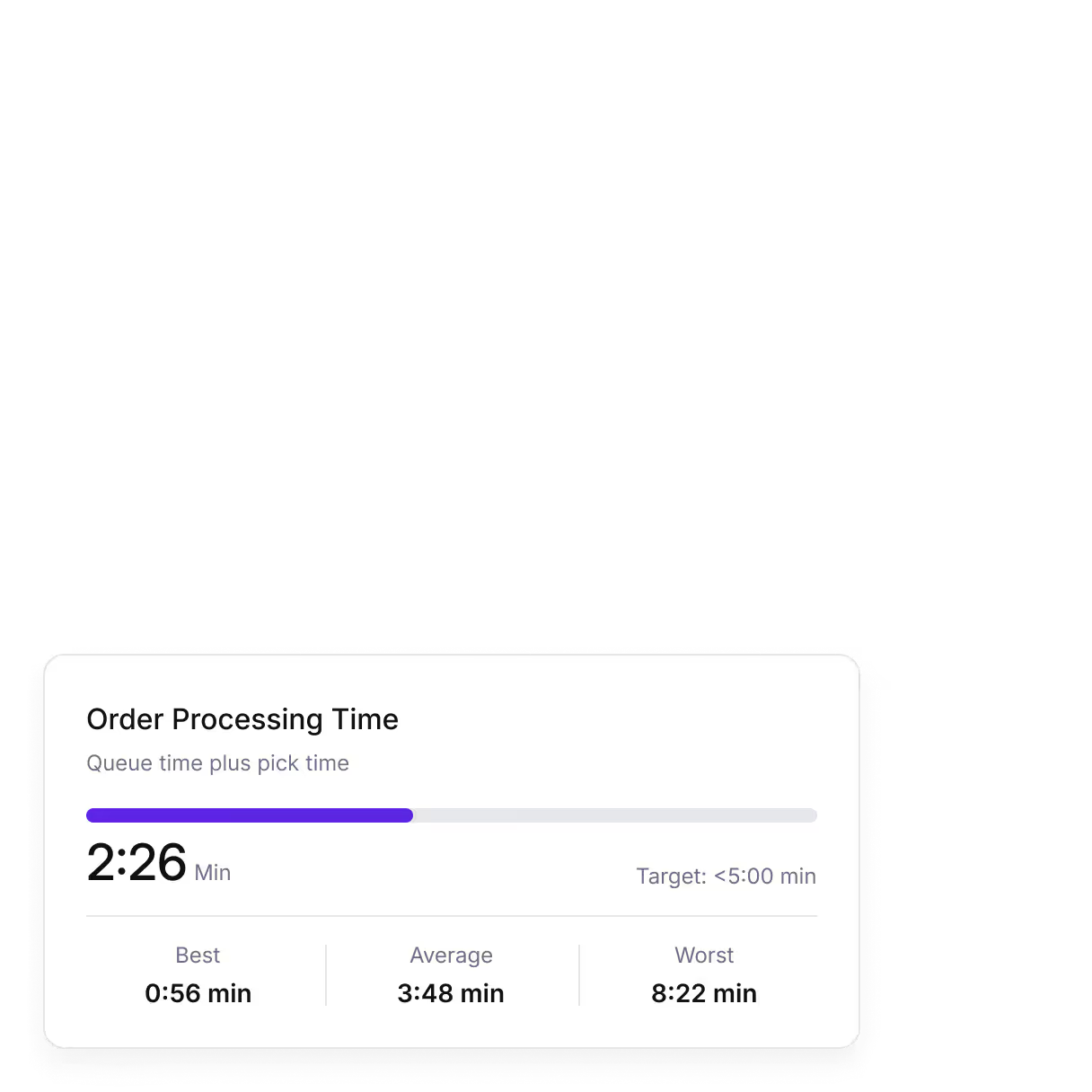
An optimized pick-pack-dispatch engine keeps every dark store in sync, from temperature-aware staging to real-time tasking, so orders move faster and with total accuracy even under peak demand.
Empower teams to work smarter
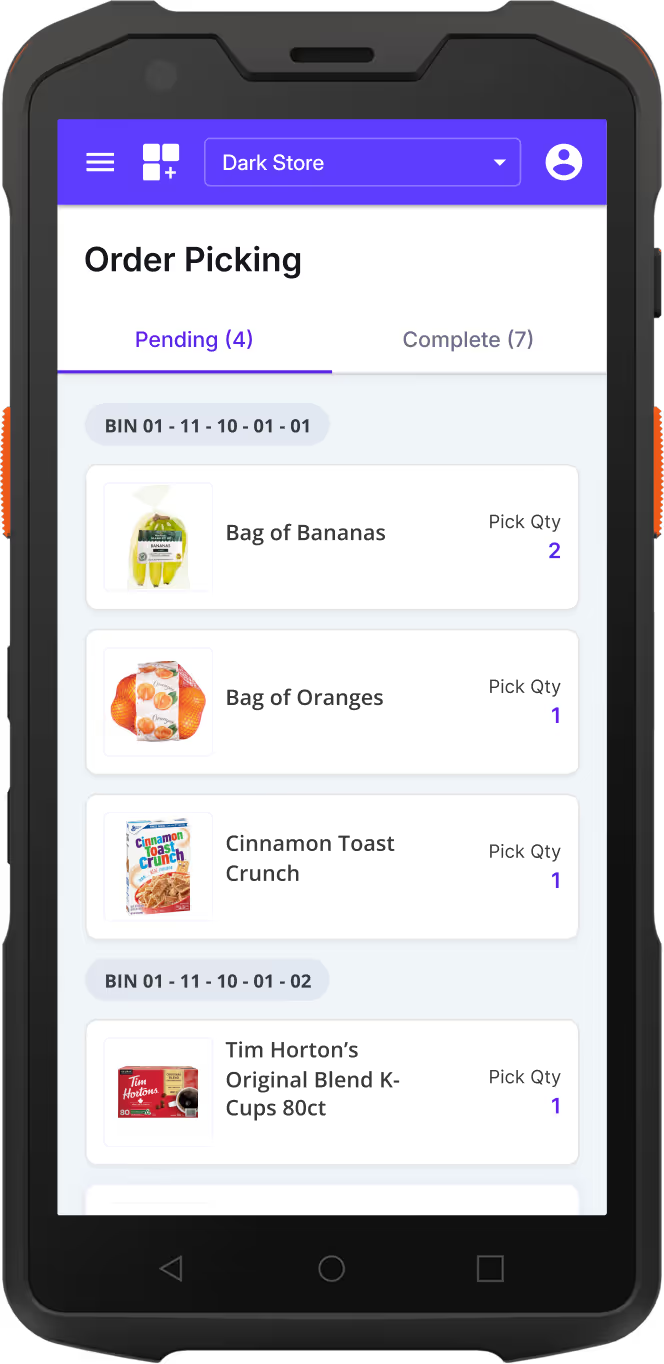
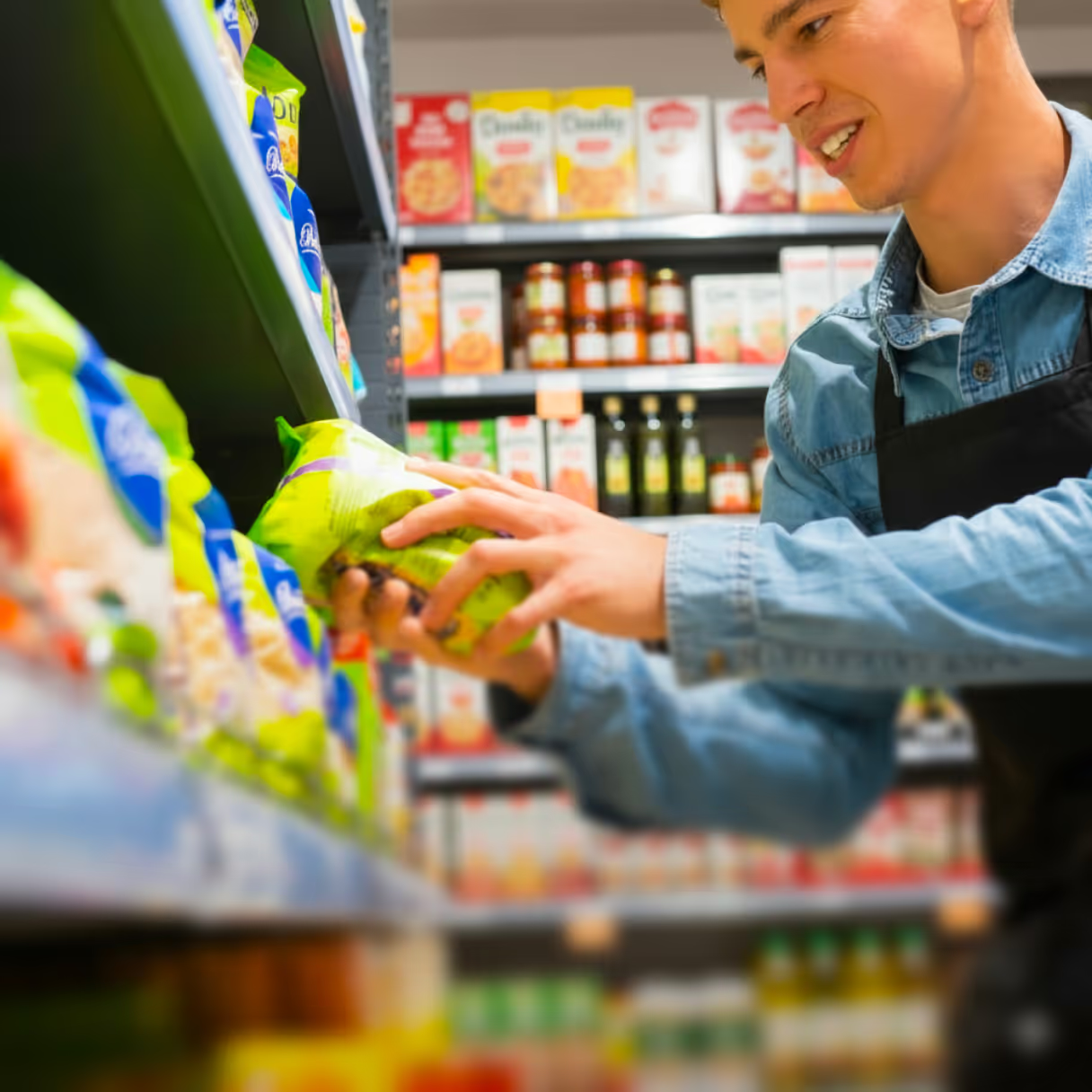
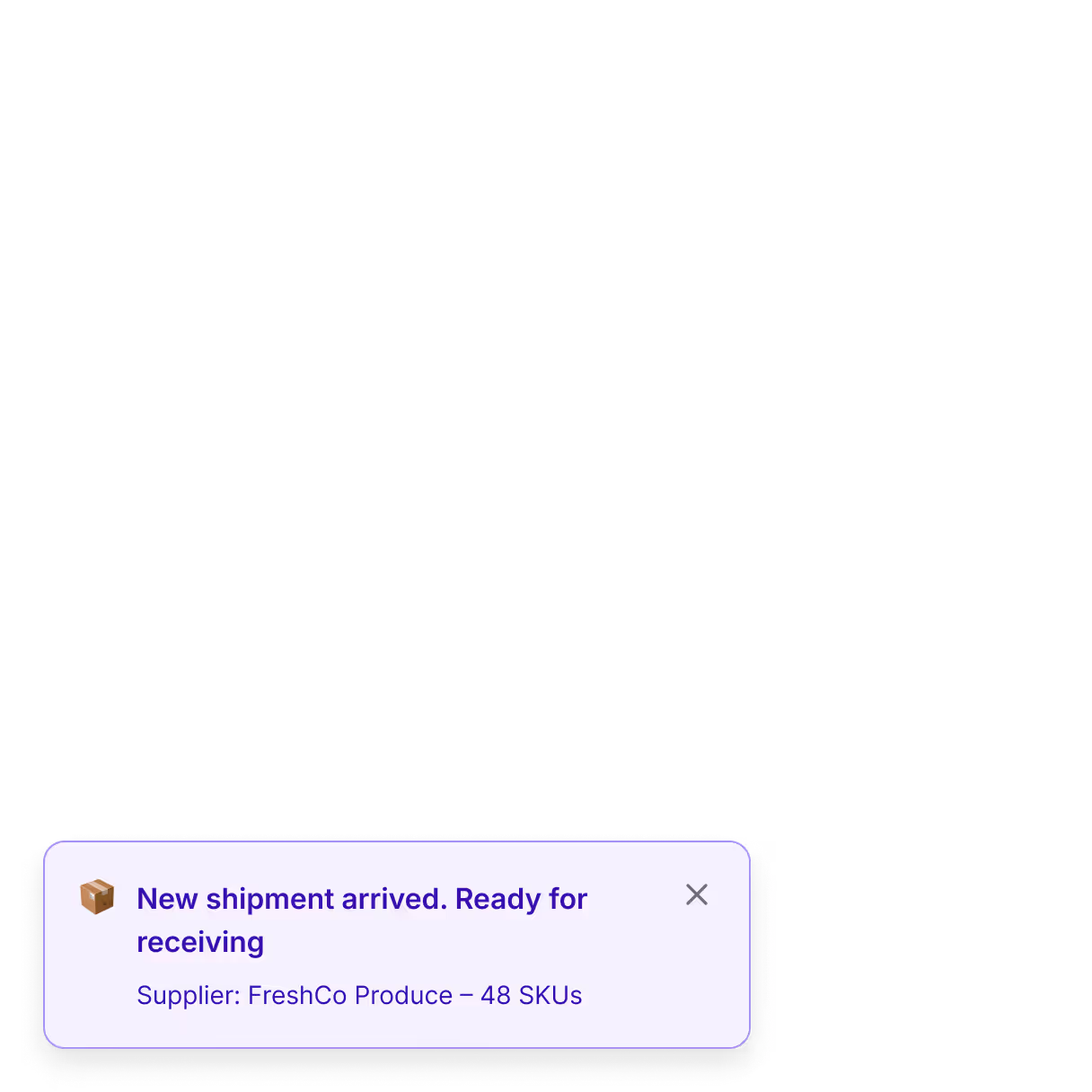
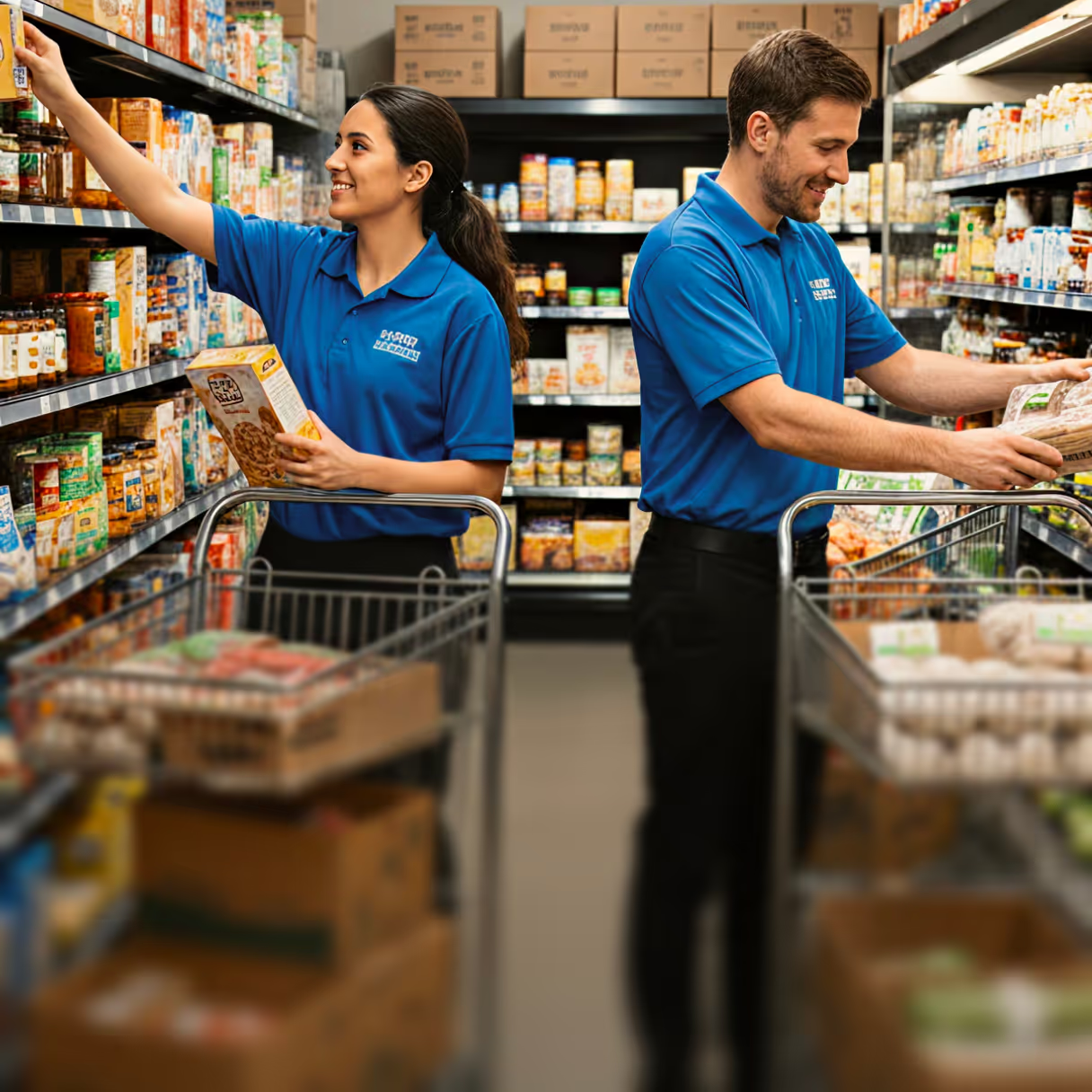
A guided, intuitive interface with built-in notifications keeps staff one step ahead. Teams learn fast, work confidently, and stay productive — minimizing the cost and disruption of staff turnover.
Scale seamlessly across sites
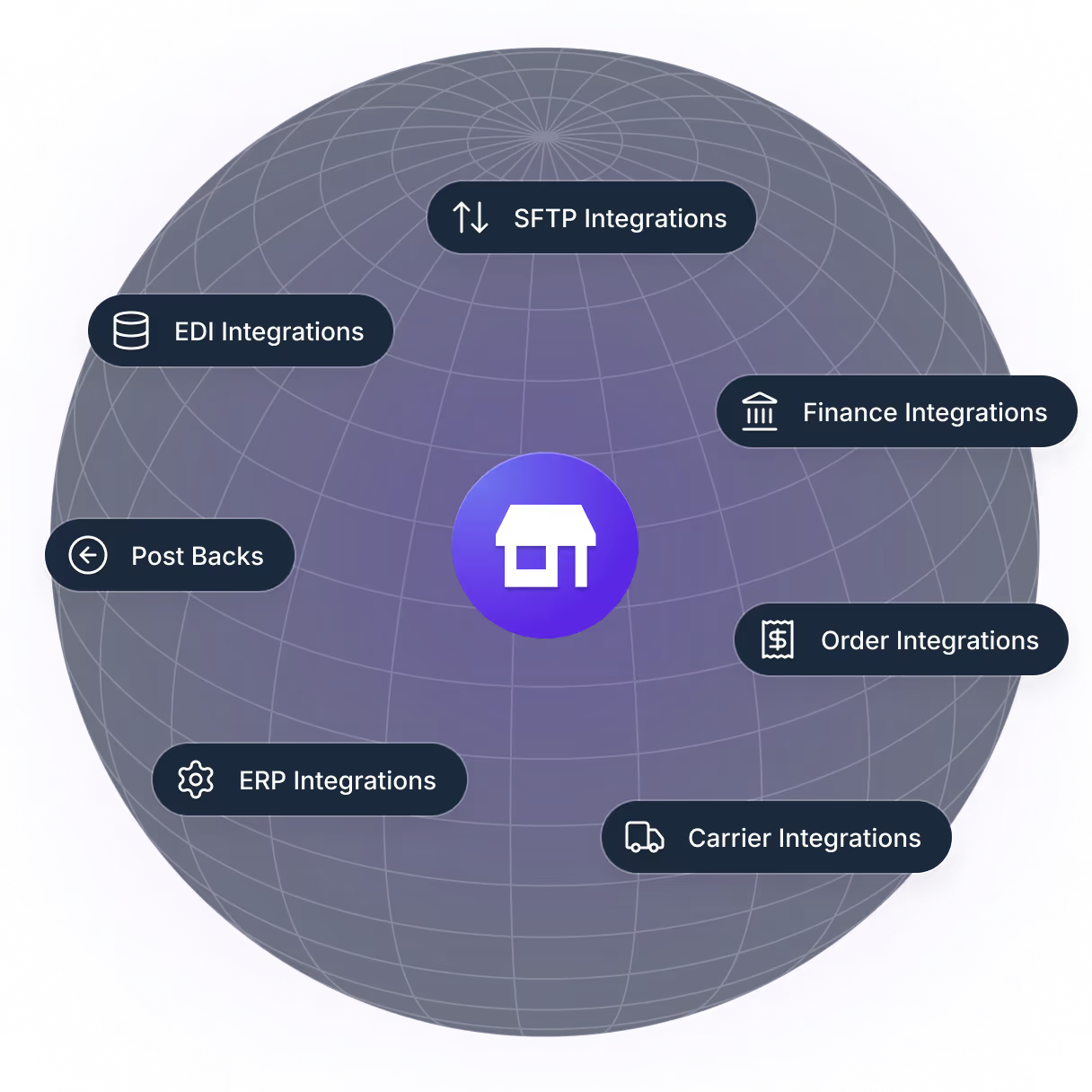
Launch, replicate, and manage dark stores across your network with standardized workflows and centralized control. Scale faster, maintain consistency, and integrate directly with your existing ERP, POS, and finance systems.
Proof in every pick. Performance across every dark store.

.avif)
Setup made simple
1. Configure space
We map every shelf, cooler, and storage zone into the OrderGrid system — creating a live digital twin of your space.
2. Connect systems
We connect your POS, e-commerce, delivery apps, suppliers, and ERP to OrderGrid’s unified order, inventory, and replenishment engine.
3. Launch dark store ops
Staff pick, pack, and dispatch from a unified Fulfillment Hub — guided by real-time alerts, capacity tools, and a Dark Store OS dashboard.
Designed for what on-demand grocery really needs


Real-time inventory menu
Show exact item availability with live stock visibility and instant reservation at checkout.


AI-powered forecasting
Align replenishment with velocity to keep fresh products in stock and reduce waste.


Control tower dashboard
Track orders, pick rates, and store performance in real time for full operational oversight.


Freshness & rotation triggers
Automated prompts for expiry checks, freshness validation and cycle counts keep inventory moving and customers happy.


Flexible weighted item handling
Automatically calculate and validate variable-weight goods for accurate pricing and fulfillment.


Order fulfillment engine
Coordinate picking, staging, and dispatch in a role-based flow optimized for accuracy and speed at every stage.


Multi-order batch picking
Handle high-volume fulfillment efficiently with simultaneous order picking and route separation.


Temp zone-aware staging
Stage orders by temperature (ambient, chilled, frozen) to protect product quality.


Compliance & traceability layer
Maintain full visibility for age-restricted, lot-tracked, and expirable products with end-to-end validation.


Directed receiving and putaway
Move inventory to optimal locations faster with guided placement and rebalancing.


Optimized space utilization
Use item dimensions to maximize shelf capacity and SKU range in compact footprints.


Integration-ready APIs
Connect directly to ERP, POS, e-commerce, and finance systems — no rip-and-replace required.
Frequently asked questions
Still have questions?
Email — info@ordergrid.com
The core dark store KPIs for grocery are order accuracy rate, pick speed per item, on-time dispatch rate, waste as a percentage of sales, and throughput per labor hour. These five metrics cover the operational loop from order receipt through delivery handoff and reflect how well the dark store balances speed, accuracy, freshness, and labor cost.
Order accuracy measures how often customers receive exactly what they ordered without substitutions or missing items. Pick speed tracks how quickly staff move through orders. On-time dispatch tracks whether orders leave the facility within the promised window. Waste percentage reveals how well the operation manages perishable inventory. Secondary KPIs include substitution rate, cycle count variance, and capacity utilization during peak windows.
OrderGrid's Dark Store OS tracks these grocery-specific KPIs in real-time dashboards, giving dark store operations teams immediate visibility into performance across every site.
A grocery dark store needs five technology layers working together: order management to receive and queue orders from all channels, inventory with real-time stock positions and reservation logic, a pick-and-pack engine with route optimization and batch management, a dispatch coordinator that stages orders by temperature zone and delivery window, and integrations to existing ERP, POS, and delivery partner systems.
For grocery specifically, the system must handle weighted items, expiry tracking, lot traceability, and temperature-zone logic. Many operators stitch together multiple tools and vendors for these functions, adding integration points that introduce latency and data inconsistency at every system boundary. Dark store software built as a single platform eliminates these integration gaps.
OrderGrid's Dark Store OS consolidates all five layers into a single, natively unified platform with no additional vendor required for dark store orchestration.
Scaling dark store operations from one site to a network requires standardized workflows, centralized visibility, and consistent execution across locations. Each new site needs the same operational playbook: receiving procedures, putaway rules, pick-route logic, staging protocols, and dispatch coordination. Without a central system, each site develops its own habits and performance drifts.
Effective multi-site dark store management uses centralized dashboards to track order volume, pick rates, accuracy, and waste across every location in real time. New sites launch faster when the operational template is codified in software rather than tribal knowledge. Standardized workflows also simplify staff training and make labor transferable between locations, which matters for mid-market grocers operating across multiple regions.
OrderGrid's Dark Store OS enables multi-site grocery dark store operations with standardized workflows, centralized KPI dashboards, and automated reconciliation to finance and ERP systems.
In-store fulfillment picks online orders from shelves shared with walk-in shoppers. This creates conflicts: pickers compete with customers for aisle space, popular items sell out before online orders are picked, and substitution rates climb during peak trading hours. Dark store fulfillment eliminates these conflicts by dedicating the entire facility to online orders.
Pick rates are faster in dark store fulfillment because routes are optimized for throughput, not merchandising. Stock availability is higher because reservation systems hold inventory at the moment of order. Accuracy improves because pickers work without interruption. The tradeoff is the cost of dedicated space and staff, which makes dark store fulfillment most viable for mid-market grocers processing 30 to 100 online orders per day or more.
OrderGrid supports both models but its Dark Store OS is specifically built to maximize the throughput advantage of dedicated grocery dark store fulfillment.
Waste reduction in a grocery dark store starts with demand-led stock levels. Ordering too much fresh product creates spoilage; ordering too little causes stockouts and substitutions. Effective dark store management systems align purchase orders with actual order velocity per SKU to keep inventory balanced against real demand.
Expiry-aware workflows flag products approaching their sell-by date, triggering markdown logic or priority picking before waste occurs. Cycle count automation catches discrepancies between system stock and physical stock before they compound. Directed putaway ensures new deliveries go behind existing stock, enforcing first-in-first-out rotation without relying on staff discipline alone. These controls matter more in dark store operations than traditional retail because there are no walk-in shoppers to absorb short-dated stock.
OrderGrid's Dark Store OS reduces grocery waste through automated freshness triggers, lot-tracked rotation, and demand-aligned ordering across every zone.
Grocery dark stores manage fresh, chilled, and frozen products through temperature-zone orchestration. The facility is divided into ambient, chilled, and frozen zones, and the order management system coordinates picks across all three so that frozen items are picked last and staged in temperature-appropriate areas until dispatch.
Expiry-aware tracking ensures staff pick the shortest-dated stock first for immediate orders while reserving longer-dated inventory for future demand. Lot tracking maintains traceability from receiving through dispatch. Automated freshness checks trigger cycle counts when products approach expiry thresholds. These workflows are specific to grocery dark store operations because perishable inventory introduces failure modes that general warehouse systems do not address.
OrderGrid's Dark Store OS handles this with zone-based pick sequencing, expiry-and-lot-aware inventory, and automated rotation triggers designed for grocery perishables.
A dark store is a physical facility, often resembling a supermarket inside, that is closed to the public and used exclusively to fulfill online grocery orders. Unlike a traditional retail store designed for customers to browse aisles, select products, and check out, a dark store is organized entirely for pick efficiency rather than merchandising.
Shelving follows pick-route logic, not product-category merchandising logic. There are no checkout lanes, promotional displays, or customer service desks. Staff pick, pack, and stage orders for delivery or collection. The absence of foot traffic means every square meter serves fulfillment throughput. This dedicated structure enables higher pick rates, lower substitution rates, and more consistent order accuracy than hybrid store fulfillment models.
OrderGrid's Dark Store OS provides the operational backbone for this model, coordinating receiving, putaway, picking, staging, and dispatch in a single grocery-specific dark store management platform.
Most grocery dark stores today use human pickers guided by software, not full robotic automation. The economics of grocery fulfillment, with its mix of ambient, chilled, frozen, and variable-weight items, make full automation impractical for most operators at current order volumes. Instead, effective dark store operations automate the decision layer while human workers execute the physical tasks.
The decision layer includes which orders to batch, which pick routes to follow, what to stage where, and when to dispatch. Human workers receive step-by-step prompts on mobile devices. This hybrid approach keeps labor flexible during demand spikes while driving consistency in pick accuracy and order assembly. It also reduces training time for new staff compared to manual systems that rely on tribal knowledge of the facility layout.
OrderGrid's Dark Store OS automates routing, batching, and task assignment so grocery staff work faster without needing weeks of training.
The dark store model compressed grocery delivery windows from next-day to under two hours in many markets. By dedicating space and staff entirely to online order fulfillment, retailers eliminated the bottleneck of picking from customer-facing shelves during trading hours. This operational structure turned same-day grocery delivery from a premium service into a baseline expectation.
Grocery dark stores process orders in parallel batches, stage them by temperature zone, and dispatch in tight windows. Retailers who adopted the dark store model early gained a structural advantage in order throughput and delivery reliability. The model also reduced substitution rates by separating online inventory from walk-in shopper demand, giving pickers access to reserved stock rather than competing for shared shelf space.
OrderGrid's Dark Store OS powers this model with multi-order batch picking, zone-based staging, and real-time dispatch coordination for grocery dark store fulfillment.
The primary benefits of operating a dark store are speed, accuracy, and dedicated capacity. A dark store processes grocery orders faster than in-store fulfillment because staff work without navigating shoppers, and the layout is optimized for pick routes rather than merchandising. Order accuracy improves because stock positions are controlled and reservation systems prevent overselling.
The challenges center on fresh product management, labor scheduling for variable demand, and maintaining profitability at lower order volumes. Waste control requires disciplined stock rotation and expiry monitoring across temperature zones. Dark store operations demand tighter coordination between receiving, putaway, picking, and dispatch than a traditional retail environment because every process directly affects order quality.
OrderGrid addresses these dark store operations challenges with automated freshness triggers, demand-led capacity tools, and real-time performance dashboards that give grocery operators direct control over each variable.
A dark store fulfills individual consumer orders with SKU-level picks, packing each order for last-mile delivery or customer collection. A dark warehouse handles bulk storage and distribution, moving pallets or cases between facilities with minimal item-level handling. The two models serve fundamentally different operational requirements despite sharing the "dark" designation.
Dark stores require grocery-specific capabilities: expiry tracking, temperature-zone staging, and high-frequency batch picking across thousands of SKUs. Dark warehouses prioritize storage density and automated goods-to-person retrieval. Most grocery retailers evaluating fulfillment models need both concepts clearly separated because the technology stack, labor model, and facility layout differ at every level.
OrderGrid's Dark Store OS is purpose-built for the individual-order model, with batch picking, zone-based staging, and lot-aware tracking designed for grocery dark store fulfillment.
Dark store theory describes a logistics model where retailers convert physical space into dedicated fulfillment facilities closed to walk-in shoppers. Rather than optimizing for browsing and impulse purchases, the entire layout prioritizes pick speed, stock density, and dispatch efficiency. The model gained traction as online grocery demand outpaced what traditional stores could fulfill from existing aisles.
For grocery retailers, dark store theory means purpose-built zones for ambient, chilled, and frozen products, with workflows designed around order accuracy rather than shelf appeal. Staff follow optimized pick routes instead of merchandising layouts. Inventory positions are controlled through reservation systems that prevent overselling. The operational model differs fundamentally from hybrid approaches where stores attempt to serve both walk-in customers and online orders from the same footprint, creating fulfillment conflicts during peak trading hours.
OrderGrid's Dark Store OS operationalizes dark store theory with directed workflows, temperature-zone orchestration, and real-time capacity dashboards built specifically for grocery dark store operations.
The dark store platform that delivers
Real-time inventory, smart tasking, and space-aware design — everything your team needs to fulfill faster, fresher, and without friction.