


Inventory visibility software grocery teams can trust
Real-time, location-aware, expiry-aware stock counts across every store, backroom, and online channel. Built for grocery operators who need live inventory data they can act on.


Fix the biggest blind spot in grocery retail execution
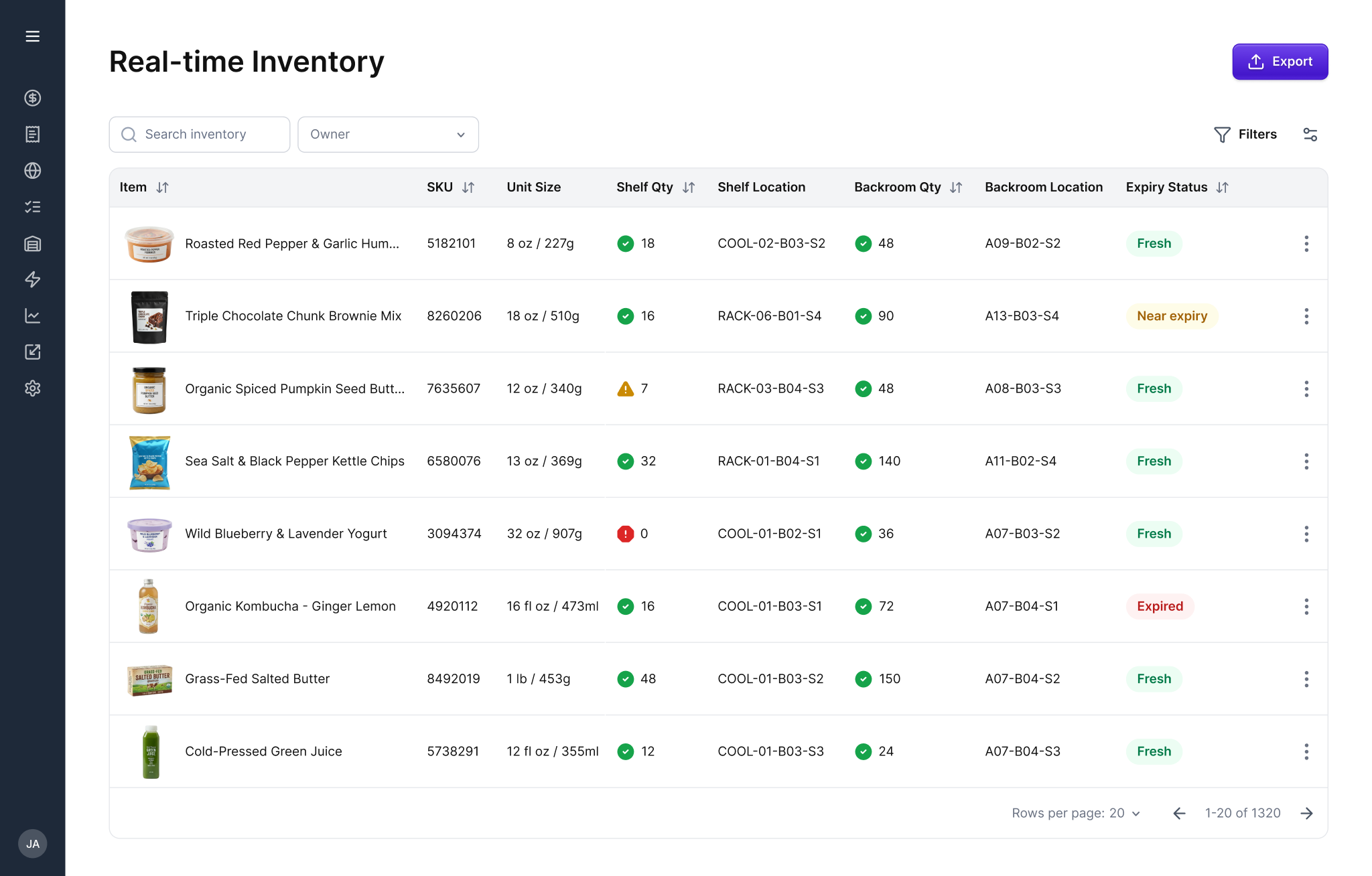
OrderGrid’s real-time inventory layer connects store systems and aggregators instantly—so what’s in stock is always available to sell, and easy to find.
Fewer missed sales, fewer availability breakdowns, and more revenue from inventory your systems couldn’t see before.
Improve on-shelf availability up to
Close the backroom-to-shelf gap to always keep shelves stocked
Reduce fresh waste by up to
Use expiry tracking and FEFO logic to manage short-dated SKUs
Cut store labor by up to
Improve speed and consistency with location-aware inventory
Raise on-hand confidence up to
Cut phantom inventory so teams trust what’s available and where
Make real-time inventory management your growth engine
Live inventory data that moves as fast as your store—so every product is trackable, sellable, and generating revenue the moment it hits the floor.
Unlock more sales from existing stock
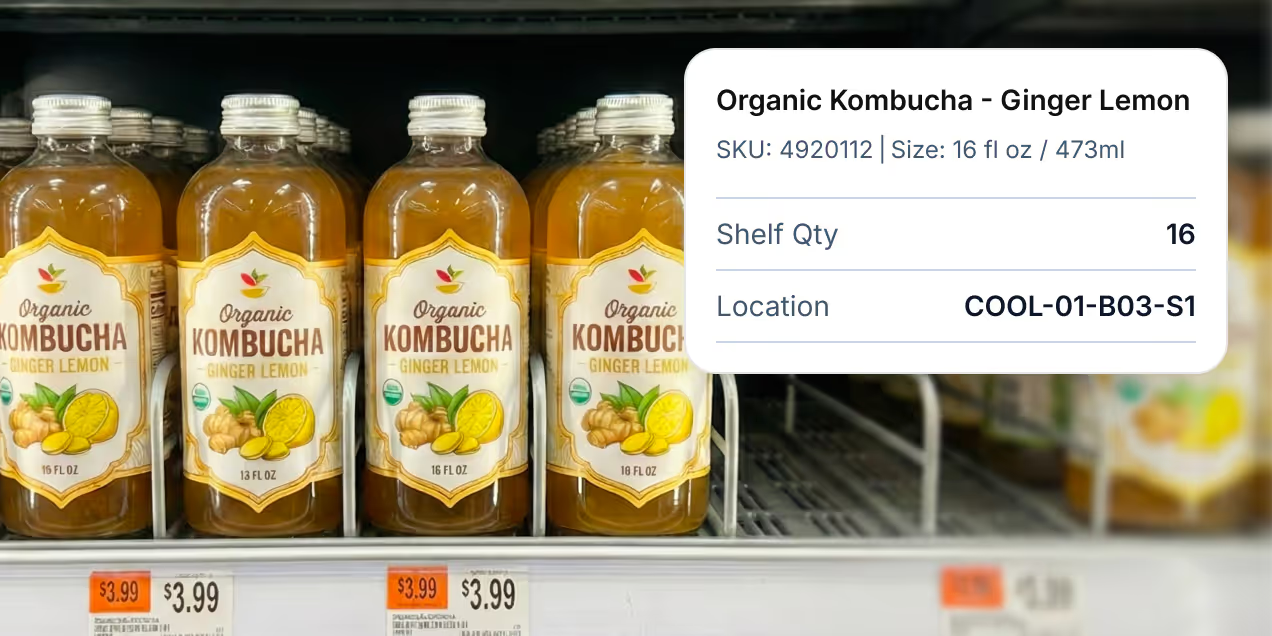
Make every in-stock item visible, findable, and ready to sell. Fewer units sit in the backroom, and more end up in customers' hands, in-store and online.

Remove friction from the in-store journey
Better inventory data means fewer gaps on shelves, faster restocks, and more time for staff to focus on customers—so shoppers always get what they need.
Keep online orders accurate and complete
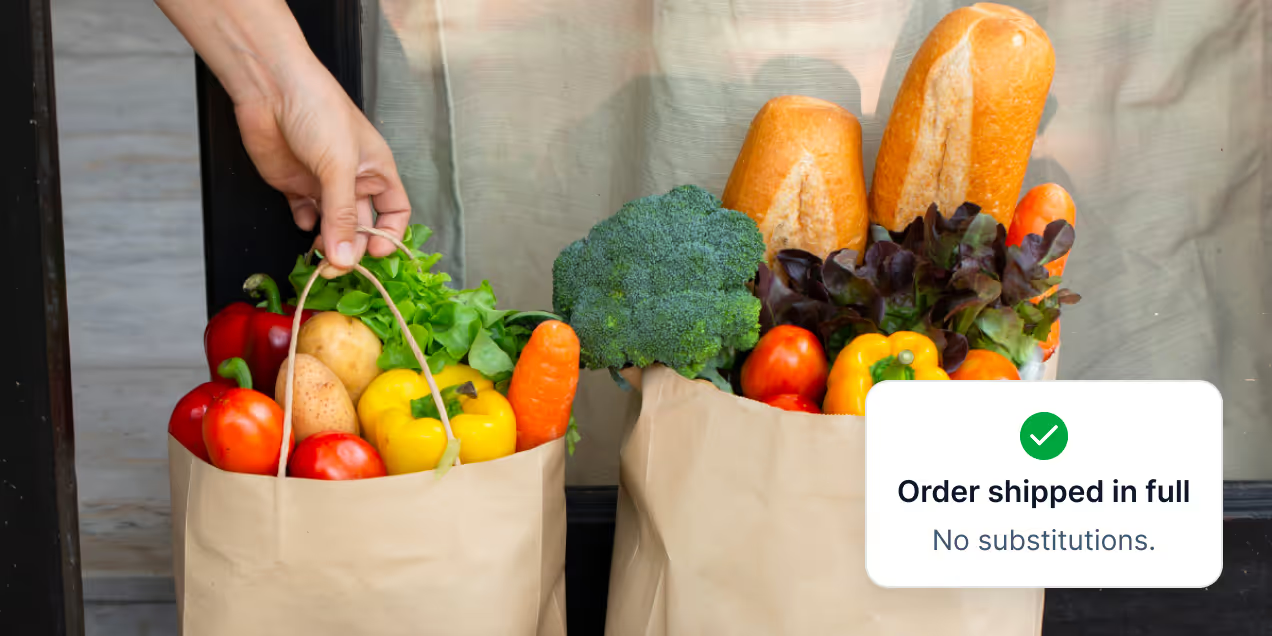
Real-time inventory ensures what’s on the site is actually on the shelf—so customers only buy what you can fulfill, and orders get completed without substitutions, missed items, or cancellations.
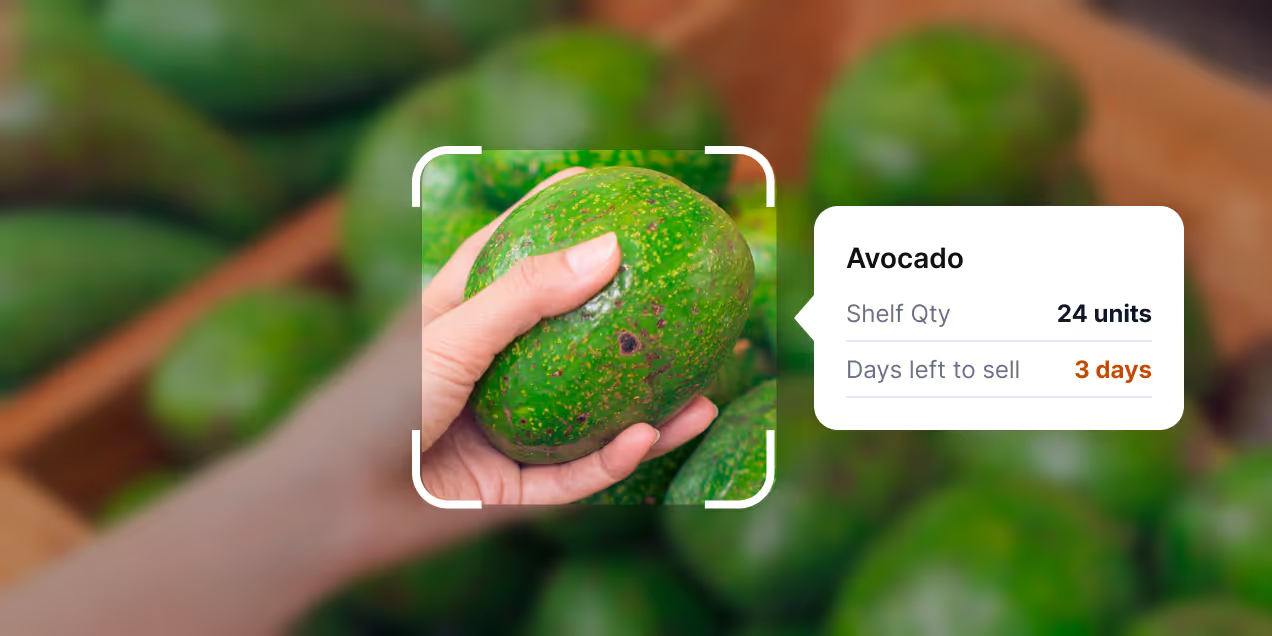
Protect freshness and compliance
Track expiry in real time and support FEFO workflows—so you reduce shrink, keep shelves fresh, and make sure customers always take home the longest-lasting product.
One operating layer powering grocery retail execution
A unified, location- and expiry-aware inventory visibility software layer that connects receiving, backroom, shelf, online availability, and ERP in real time.
Capture quantity and expiry at receiving so every unit enters your system accurate, traceable, and sell-ready.
Maintain real-time, location- and expiry-aware visibility into the backroom so sellable inventory is never lost, misplaced or forgotten.
Move inventory from backroom to shelf in real time with associate-friendly mobile UI so gaps never become missed sales.
Keep shelves reliably stocked with expiry- and location-aware inventory so shoppers and pickers find what they need the first time.
Expose and sell only what’s truly available in real-time to prevent overselling, substitutions, and missed revenue.
Sync real-time store inventory with your ERP seamlessly without batch delays or manual reconciliation.
Capture quantity and expiry at receiving so every unit enters your system accurate, traceable, and sell-ready.
Maintain real-time, location- and expiry-aware visibility into the backroom so sellable inventory is never lost, misplaced or forgotten.
Move inventory from backroom to shelf in real time with associate-friendly mobile UI so gaps never become missed sales.
Keep shelves reliably stocked with expiry- and location-aware inventory so shoppers and pickers find what they need the first time.
Expose and sell only what’s truly available in real-time to prevent overselling, substitutions, and missed revenue.
Sync real-time store inventory with your ERP seamlessly without batch delays or manual reconciliation.
Frequently asked questions
Still have questions?
Email — info@ordergrid.com
The inventory accuracy challenges retail industry teams face every day cluster into four categories: capture gaps from mis-scans and late write-offs; system gaps from POS, WMS, and online channels that don't reconcile cleanly; visibility gaps from store totals that hide where stock actually sits; and communication gaps from associates who lack a way to flag floor issues.
Grocery operators feel each one harder than general retail. Capture gaps show up at fresh receiving when expiry dates aren't recorded at the truck. System gaps appear when one channel says 12 units of milk are available, another holds 5 for online picks, and the third doesn't know 3 are past code. Together these drive stockouts, online substitutions, fresh waste, and shrink nobody can explain at quarter end.
OrderGrid addresses all four at the execution layer with expiry-aware capture, unified data, location-level tracking by temperature zone, and mobile floor-team flagging built into the same platform.
Real-time inventory tracking improves supply chain efficiency by removing the lag between what's happening in stores and what the broader supply chain sees. When stock counts update at the moment of every receipt, sale, pick, and write-off, store and distribution-center teams stop acting on stale numbers and decisions catch demand shifts days earlier.
For grocery operators, the efficiency gain compounds across the network: fresh DCs route deliveries based on actual store-level depletion rather than yesterday's batch, merchandising catches shifts in produce or dairy days earlier than batch-driven systems allow, and the network sees fewer emergency fresh restocks, lower stock buffers across stores, and less waste from over-ordering against phantom counts on short-dated SKUs.
OrderGrid feeds live inventory data from every store back into the supply chain in seconds, so fresh DC planning, multi-temperature distribution, and store execution operate on the same picture rather than three different versions of yesterday.
Retail inventory software improves store efficiency by automating work store teams shouldn't be doing manually. It cuts labor on stock counts, paper-based shelf walks, end-of-shift reconciliation, and emergency reorders triggered by inaccurate counts. The result is fewer wasted hours, faster restocks, fewer customer-facing stockouts, and store teams freed up for higher-value work.
In grocery, that work adds up fast. Manual counts across fresh, frozen, and ambient zones. Paper-based on-shelf availability audits. Reconciliation of damages and expired pulls at end of shift. Walkie calls between the floor and the back office to confirm whether the backroom holds enough yogurt to refill the shelf. Good retail inventory software captures stock movements automatically at the source and surfaces exceptions in real time.
OrderGrid is retail inventory software for grocery and fresh-food retail operators, with mobile-first capture and exception flagging that takes minutes out of every shift and frees teams for fresh-food prep and customer service.
The best software solutions for real-time inventory management share four properties. First, they capture every stock movement at the source. Second, they sync across POS, ERP, online channels, and store mobile devices in seconds, not batches. Third, they support location-level data so committed, available, held, and expiring stock are visible separately.
The fourth property separates platforms that work in grocery from those that don't: native handling of the vertical's edge cases rather than workarounds. A real-time inventory platform that doesn't understand FEFO rotation, multi-temperature zones, daily fresh deliveries, or expiry-driven available-to-sell calculations isn't usable for produce, dairy, deli, meat, or bakery, the categories that drive grocery margin and shopper loyalty.
OrderGrid checks all four properties, with grocery and fresh-food logic built into the platform rather than bolted on after deployment.
Inventory visibility software gives retailers a view of stock counts, location, and status across every store, channel, and warehouse. Done well, it answers three questions: how much do I have, where exactly is it, and what is available to sell right now.
For grocery and fresh-food retailers, "available to sell" carries weight that ambient retail doesn't have. A product can be in the store but unavailable because it's past code, committed to an online pick, sitting in the backroom unstocked, or held back for FEFO rotation. Grocery buyers should look at refresh latency, location-level granularity, multi-temperature handling, expiry-aware logic, and integration depth with existing food-retail systems.
OrderGrid is purpose-built inventory visibility software for grocery and fresh-food retail operators, with location-aware, expiry-adjusted stock data that updates in seconds across every store, channel, and warehouse.
Real-time inventory tracking is a system that updates stock counts the moment any transaction happens: a receipt, a sale, a transfer, a pick, a markdown, a damage write-off, an expiry-triggered removal. There is no nightly batch and no manual reconciliation step between the event and the data.
For grocery and fresh-food operators, real-time inventory tracking is what makes inventory visibility actually usable. In fresh categories, batch-refreshed numbers are wrong within hours, not days. A morning count of yogurt is no longer accurate by lunch once shoppers buy, online pickers pull, and damaged units get removed. The benefits of inventory visibility only land when the data is current.
OrderGrid's real-time inventory management layer captures every stock movement at the source across fresh, frozen, and ambient zones, syncs across the store, backroom, and online channels within seconds, and gives store teams accurate inventory visibility they can act on without waiting for end-of-day reports.
To calculate on shelf availability, the basic formula divides SKUs available on shelf at audit time by SKUs that should be on shelf per planogram, expressed as a percentage. On-shelf availability is calculated as the percentage of SKUs present and sellable on the shelf during the hours shoppers are looking for them.
The nuance for grocery is what counts as available. A shelf with five units of milk that all expire today has zero true availability for that SKU. A facing of yogurt moved behind newer dated stock isn't visible to shoppers and doesn't count either. Damaged units, units committed to online order picks, and units in the backroom but unstocked all reduce the true count further.
OrderGrid adjusts the on-shelf availability calculation automatically using expiry data, online-order holds, location-aware shelf flags, and FEFO rotation status, so the rate reflects what grocery shoppers can actually buy.
A perpetual inventory system updates inventory records continuously, transaction by transaction, using software, scanners, and integrated point-of-sale data. A periodic inventory system updates records only at scheduled intervals, usually once a month or quarter, after a manual physical count of every SKU.
For grocery, periodic counting isn't viable. Fresh-food velocity, daily multi-temperature deliveries, and short-dated SKU rotation mean a stock count from last month is fiction for produce, dairy, deli, and meat. A perpetual inventory system is the baseline for any modern grocer. But not every perpetual system runs in real time. Some refresh in batches every few hours, which means inventory data is still hours behind the floor, useless for fresh categories.
OrderGrid is a real-time inventory management layer built on perpetual inventory principles but operating at grocery execution speed: stock counts, on-shelf availability, and expiry-aware available-to-sell numbers update within seconds across stores and online channels.
To track on shelf availability starts with separating store-total inventory from location-level inventory. Operators track on-shelf availability through three methods, often combined: mobile shelf scans by store associates, computer vision systems that audit empty facings continuously, and system-derived inferences from POS scan data flagging SKUs that should be selling but aren't.
A grocery store can show 48 units of an SKU in the system, but if 45 are in the backroom cooler, 2 are committed to an online order, and only 1 is on the shelf, on-shelf availability is broken even though the store total looks healthy. Computer vision performs best in high-velocity dairy and produce, where empty facings cost the most revenue per hour.
OrderGrid tracks on-shelf availability at the location level natively, factors in fresh expiry windows and online-order holds, and feeds the data back into replenishment and online-order routing where availability gaps cost the most revenue.
To improve on-shelf availability comes down to closing the gap between what your system says is in stock and what shoppers actually find on the shelf. Four things drive most of the improvement: location-level tracking, expiry-aware available-to-sell counts, faster fresh-category correction, and mobile floor-team flagging.
Track inventory by location instead of store total, so backroom stock, shelf stock, online-pick holds, and committed transfers are visible separately. Factor expiry data into available-to-sell counts, so the system never tells the floor team that past-code milk or yesterday's produce is sellable. Weight fresh categories differently than ambient. Give floor teams a mobile way to flag gaps and inventory discrepancies in real time.
Grocery operators using OrderGrid see fewer phantom inventory events, tighter on-shelf availability across fresh and ambient zones, and faster correction of inventory discrepancies because gaps surface at the moment they happen rather than at end-of-day reconciliation.
The best inventory management software for grocery stores is the one purpose-built for grocery, not a general retail inventory management system retrofitted onto fresh-food operations. Grocery has rules other categories don't: FEFO picking, daily fresh deliveries, short-dated SKU rotation, multi-temperature storage, and online-order picking from store shelves.
Beyond those rules, expiry-driven available-to-sell calculations change by the hour across produce, dairy, deli, meat, and bakery. The best retail inventory management software and the best grocery inventory management software for fresh-food operations include grocery store inventory management software with native convenience store inventory software workflows, not a horizontal tool that treats every SKU the same. Mid-market grocery operators need enterprise-grade inventory logic without the enterprise IT footprint.
OrderGrid is a grocery store inventory management software platform built for grocery and fresh-food retail operators, handling fresh food inventory management, FEFO logic, supermarket-grade location-aware visibility, and online order fulfillment natively.
Retail execution is the set of operational activities that move product from receiving to the shelf where shoppers can buy it. The activities include receiving and put-away, restocking, planogram compliance, price and promotion compliance, and online order picking from store shelves.
In grocery and fresh-food retail, execution gets harder because product arrives multi-temperature on daily delivery cycles, fresh SKUs have short shelf lives, and online picking from the same shelves as walk-in shoppers creates constant available-to-sell conflicts. When retail execution breaks, the symptoms show up as stockouts, on-shelf availability gaps, phantom inventory, and online order substitutions, even when the upstream forecast was accurate. Most grocers run retail execution on a stack of disconnected tools.
OrderGrid is a unified retail execution platform purpose-built for grocery and fresh-food retail operators, with multi-temperature, expiry-aware, location-level logic that horizontal tools can't match.
Higher sales. Lower shrink. Happier customers.
It all starts with inventory that’s visible, trusted, and powering every part of your store operations.