

Streamline retail task management across every store
Replace fragmented store tools with one execution layer. Coordinate tasks, track compliance, and drive consistent performance across every location. Purpose-built for grocery and multi-site food retail.

Every count. Every pick. Every store. On point.
Optimize labor, minimize waste, and drive stronger omnichannel execution with connected tools that make every action count. Measurable gains start here.
Fresher stock, less waste,
reduce shrink by
Continuous cycle counts reduce labor disruption by
Fewer errors, trusted orders with picking accuracy above
Store productivity gains unlock time for service & fulfillment
Shrink less, sell more
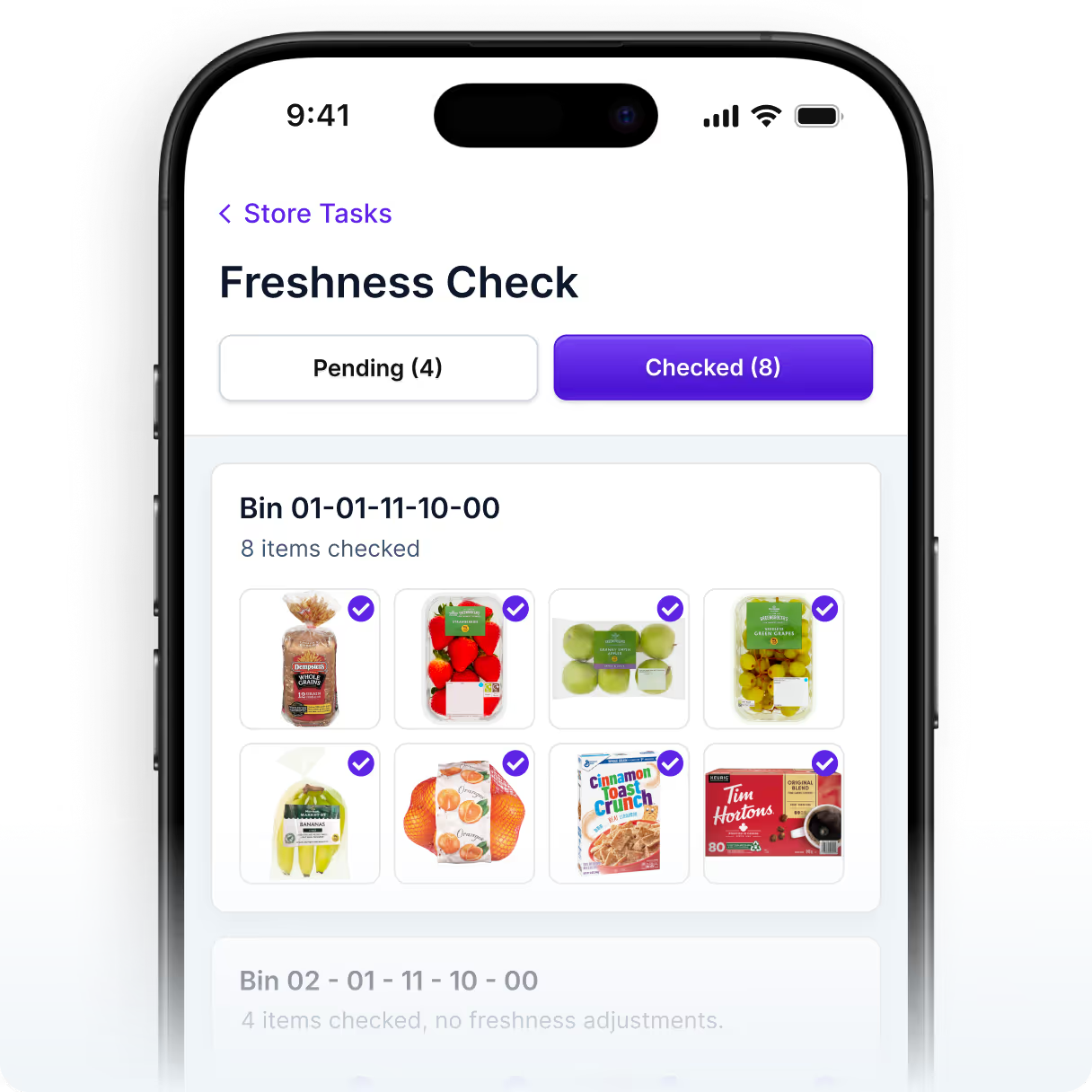
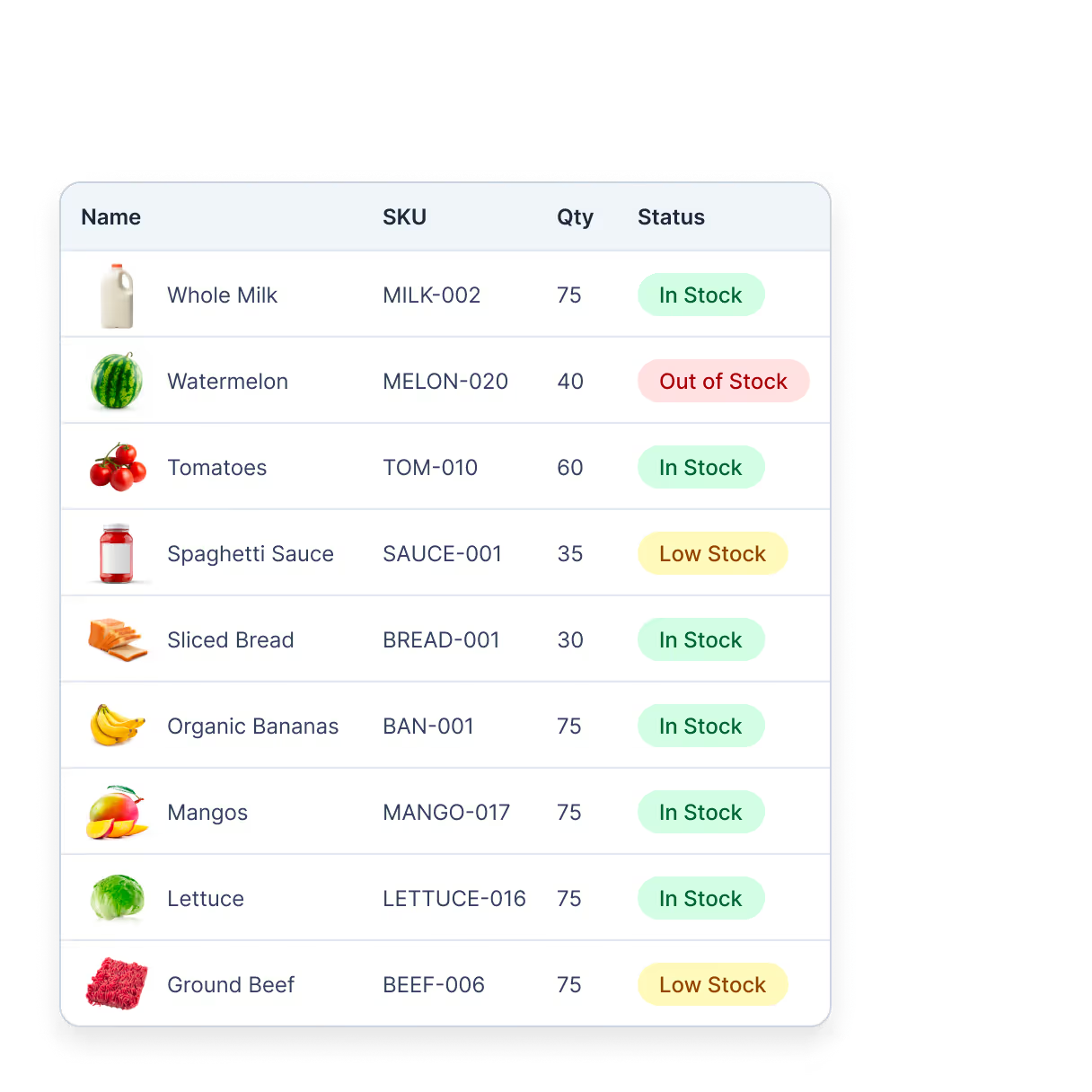
Cut spoilage and stockouts with smarter tracking from backroom to shelf. Keep products available in-store and online, improve pick accuracy, and capture more revenue—while reducing waste.
Simplify the day-to-day, speed up every task
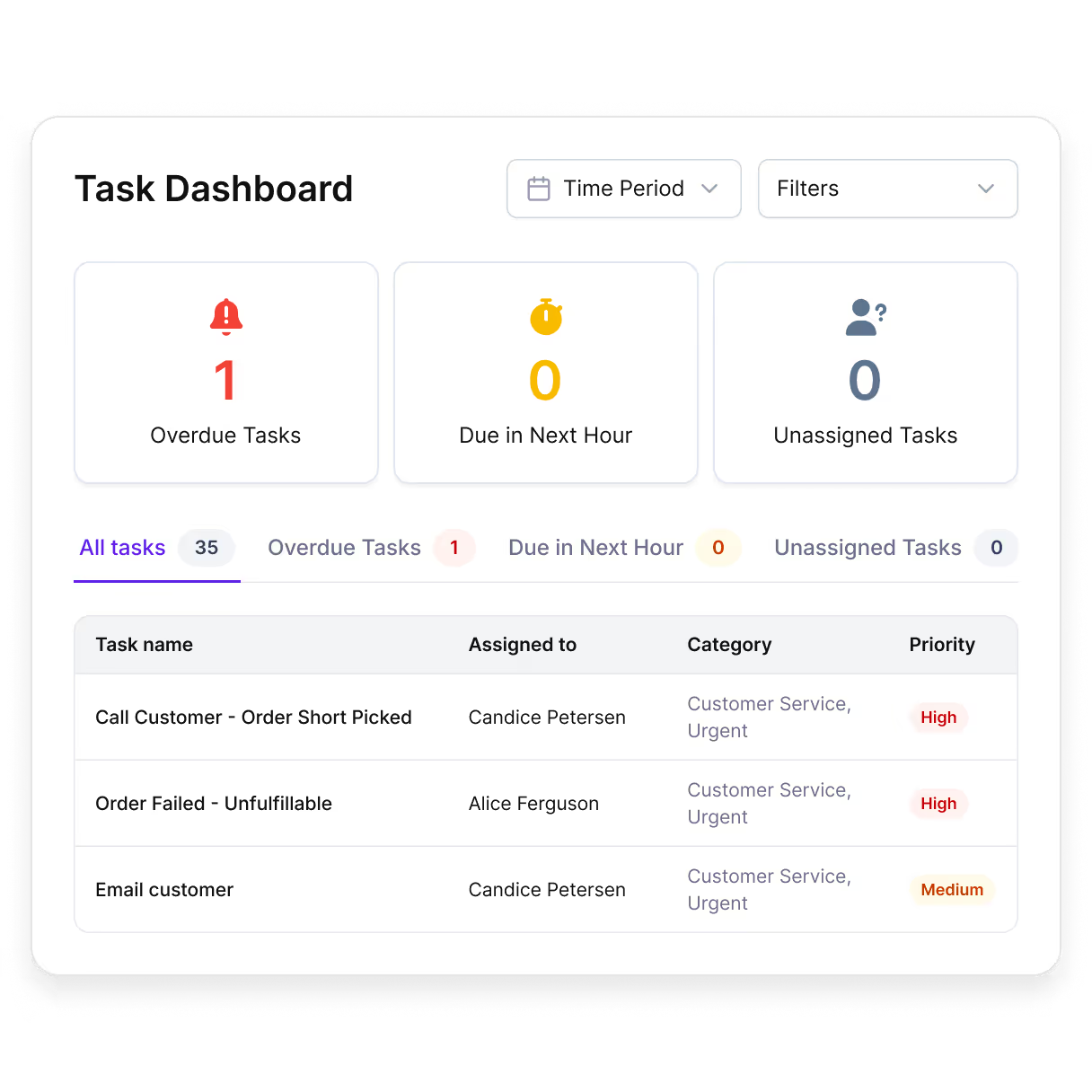
Give store teams the clarity and control to work smarter—not harder. From inventory tasks to in-aisle picks, every step flows with built-in prompts, mobile tools, and shelf-level guidance that boost speed and consistency.
Build a foundation of accuracy at scale
Put confidence at the center of your operations. With real-time data across every store, you reduce risk, improve shelf availability, and ensure every action is backed by trusted inventory insight.
Orchestrate every move, pick to pack
Keep store teams on track and every order moving—online and in-store. With built-in guidance, dynamic task flows, and real-time updates, you see every change the moment it happens. Monitor performance, reduce errors, and deliver with confidence.
Deliver consistency, store to store
Maintain performance, process, and compliance—even as you grow. With role-based oversight, built-in structure, and scalable task execution, your teams stay aligned and your operations stay sharp.

Store-level success, powered by OrderGrid


Everything store teams need to execute with confidence


AI-powered insights
Access operational insights instantly through natural language queries — no dashboards or complex interfaces.


Control tower dashboard
Monitor fulfillment health, OOS issues, pick rates, and store-level metrics in one central view.
%201.svg)
%201-1.svg)
Mobile cycle counts
Enable fast, guided inventory counts from any device—no clipboards or spreadsheets required.


Pick-to-pack workflow engine
Coordinate picking, staging, and handoff in one streamlined, role-based task flow.


Temp zone aware staging
Organize staging areas by temperature: ambient, chilled, and frozen.


Scan-to-validate execution
Confirm item accuracy with barcode scanning rules that vary by product class.


Smart reordering prompts
Surface low-stock items and autofill carts using usage trends and pick insights.


Pick path optimization
Optimize pick routes with custom layouts based on store-specific flow and zones.


Real-time stock adjustments
Instant updates across systems with audit trails for compliance and accountability.


Layout-based task flows
Configure task flows using store-specific layouts to direct actions by shelf, section, or aisle.


Multi-order cart picking
Pick multiple orders at once using cart-level separation, tracking, and routing.


Role-based access controls
Restrict or enable feature access by user type, location, or responsibility.
Hassle-free setup in just 3 simple steps
1. Connect your systems
We handle the heavy lifting—seamlessly integrating with your POS, ERP, and order sources. Our open APIs and AI-powered tech connect with any platform you use.
2. We train your team
Store teams ramp up fast with guided workflows for inventory and in-store picking, built to maximize accuracy, efficiency, and confidence.
3. Go live
Launch with real-time, omnichannel inventory fully synced across shelves, picking, and online availability—ready for seamless, scalable fulfillment.
Frequently asked questions
Still have questions?
Email — info@ordergrid.com
Store task management reduces operational complexity by centralizing task assignment, execution tracking, and compliance verification in one system rather than spreading them across email, messaging apps, spreadsheets, and disconnected tools. The average grocery retailer runs 30 to 40 software systems in-store, each one a separate source of truth that managers reconcile manually.
The reduction is operational, not just technological. Fewer systems to check means fewer errors, faster response times, and more time for customer-facing work. When task completion data lives in the same system as inventory and performance metrics, managers stop spending their shifts reconciling conflicting numbers from different platforms. The compounding effect matters most at scale: a 10-minute daily reconciliation task across 100 stores equals 16,000 hours per year of non-productive labor.
OrderGrid unifies store task management with inventory, replenishment, and performance on a single data model, eliminating reconciliation between what the task system says and what the inventory system shows.
Retail store execution software gives multi-site retailers four core benefits: standardization of workflows across every location, real-time visibility into task completion status, labor efficiency through mobile task routing and priority sequencing, and accountability through audit trails and exception alerts that create a verifiable record of what happened, when, and by whom.
Standardization ensures every location runs the same procedures for opening, compliance audits, and promotional resets. Visibility means headquarters sees execution status across all stores without relying on manager self-reporting. Labor efficiency increases when teams receive prioritized mobile task queues instead of spending time on manual coordination. Accountability closes the loop: when every task has a timestamp, an owner, and a completion record, operational gaps become identifiable and correctable rather than invisible.
OrderGrid is built specifically for grocery and multi-site food retail, where perishable goods, temperature zones, and high SKU velocity make consistent execution particularly challenging.
Operational consistency across grocery store locations requires three elements: standardized processes that every store follows, real-time visibility into whether those processes are being executed, and the ability to intervene quickly when they are not. Without all three, headquarters sets standards but has no reliable way to verify execution.
Most multi-location grocery operators struggle with consistency because their tools are fragmented. Task instructions live in email, compliance tracking lives in spreadsheets, and performance data lives in a separate dashboard. Store managers reconcile these sources manually, which introduces variation. The operators that achieve consistency consolidate task management, compliance verification, and performance monitoring into a single system where deviations surface in real time rather than days or weeks after they occur.
OrderGrid provides a unified store operations platform where task workflows, compliance verification, and performance dashboards share one data layer across every grocery location.
Store management software typically refers to point-of-sale systems and basic retail management platforms that handle transactions, inventory counts, and customer data. Store execution software focuses on coordinating operational tasks, workflows, compliance, and performance across locations. The distinction matters because these are different product categories solving different problems.
Many retailers searching for store management software end up with POS-centric tools that do not address the execution gap: how daily tasks get assigned, tracked, verified, and reported across 25 or more locations. POS systems track what was sold. Store execution software tracks what was done, by whom, when, and whether it met the standard. Both are necessary, but confusing them leads to purchasing decisions that leave operational coordination unsolved.
OrderGrid sits in the store execution category, providing task management, compliance tracking, and operational performance visibility that connects to existing POS and ERP systems rather than replacing them.
Retail task management improves store operations by replacing ad hoc communication and paper-based tracking with structured, measurable workflows. The impact appears in three areas: consistency across locations, accountability through real-time completion tracking, and speed through mobile-first task routing that eliminates time spent determining what to do next.
Consistency means every store follows the same process for opening procedures, inventory counts, and compliance checks rather than relying on individual manager judgment. Accountability means headquarters sees what is completed and what is not across every location without waiting for manual reports. Speed means frontline teams receive prioritized task queues on mobile devices instead of checking email, messaging apps, and paper binders for instructions. These three improvements compound as location count grows.
OrderGrid delivers these improvements as part of a connected operations platform, so task completion data automatically informs inventory accuracy and store performance metrics across every location.
Essential features in retail task management software include mobile task assignment and completion tracking, configurable workflows by store layout and role, photo and barcode verification for compliance, exception-based alerts that flag missed or overdue tasks, and cross-location dashboards that give headquarters visibility into execution status across every store.
Advanced platforms add layout-based task routing that directs actions by shelf, section, or aisle, reducing the time store teams spend navigating between tasks. Integration with inventory and workforce systems is another key differentiator: when task data informs broader operational decisions, the platform becomes more than a checklist. Look for platforms that share a live data layer across functions rather than requiring manual exports between separate systems.
OrderGrid combines these capabilities in a single platform where task management shares a real-time data layer with inventory, compliance, and store performance rather than operating in isolation.
Store execution software coordinates the operational activities that happen inside a retail location: task assignments, compliance checks, workflow sequencing, and performance tracking. It is distinct from retail execution software used by consumer packaged goods brands for field merchandising and planogram audits. Store execution software serves the retailer's own operations team, not external brand representatives.
The goal is consistent, measurable completion of daily store processes across every location, including opening and closing procedures, compliance verification, promotional resets, and requests from headquarters. The category differs from store management software, which typically refers to POS-centric platforms focused on transactions and basic inventory. Execution software focuses on what happens between transactions: the operational tasks that determine whether a store runs consistently or unevenly.
OrderGrid delivers store execution as part of a unified operations platform where execution data feeds directly into inventory accuracy, replenishment decisions, and fulfillment coordination.
Choosing the best retail task management software starts with mapping current operational pain points: task completion visibility, compliance gaps, communication breakdowns between headquarters and stores, or inconsistency across locations. Evaluate platforms against five criteria: mobile-first design, role-based workflows, integration depth, real-time reporting, and scalability without reimplementation.
Mobile-first design matters because frontline store teams work on the floor, not at desks. Role-based workflows ensure the right tasks reach the right people by function and location. Integration depth determines whether task data flows into POS, ERP, and workforce systems or stays siloed. Real-time reporting gives headquarters cross-location task status without waiting for end-of-day uploads. Scalability means the platform supports growth from 25 locations to 200 without requiring a new implementation.
OrderGrid is purpose-built for grocery and multi-site food retail, with 90-day deployment and a single data model that connects task execution to the rest of store operations.
Retail task management software is a category of digital tools that help retailers organize, assign, track, and verify daily operational tasks across store locations. These tasks include opening and closing checklists, inventory counts, merchandising resets, compliance audits, promotional setups, and operational requests from headquarters to store teams.
The software replaces paper checklists, scattered messaging apps, and manual follow-up with structured digital workflows that provide accountability and visibility at scale. For multi-location retailers, this solves a specific problem: headquarters sets operational standards, but without a centralized task system, there is no reliable way to verify whether those standards are actually being executed store by store, shift by shift.
OrderGrid includes retail task management as part of its store operations platform, where task data connects directly to inventory, compliance, and performance systems on a single data model.
Yes. Modern retail task management software is designed to integrate with POS, ERP, workforce management, and inventory systems to create a centralized operational hub. Integration matters because store teams lose productivity toggling between disconnected tools, and data silos between store management systems create blind spots in execution tracking and compliance verification.
The most effective integrations are bidirectional, meaning task completion data flows back into inventory and planning systems automatically. When a store team completes a cycle count task, the results update stock records without a separate manual entry step. API-first architectures make this possible without requiring retailers to replace their existing technology stack. Deployment alongside current systems, rather than rip-and-replace, is the standard for modern platforms.
OrderGrid connects with existing POS, ERP, and order management systems through an API-first architecture, with deployment typically completed in 90 days alongside a retailer's current stack.
The most effective tools for managing retail store operations fall into four categories: task management platforms for daily execution coordination, workforce management systems for labor scheduling, compliance tracking tools for accountability and audit trails, and performance dashboards for cross-location visibility. The strongest results come from platforms that unify these functions in one system.
Retailers running 25 to 200 or more locations face a specific challenge: the average grocery chain operates 30 to 40 disconnected software systems in-store, each one a separate source of truth. When these systems disagree, store managers spend hours reconciling data manually instead of executing operational priorities. Consolidating task management, compliance, and performance tracking into a single platform eliminates that reconciliation tax and gives headquarters reliable, real-time visibility into store-level execution.
OrderGrid connects task execution, compliance tracking, and store performance in one platform purpose-built for grocery and food retail, replacing fragmented tools with a single operational data model.
Retail task management software helps multi-site retailers organize, assign, track, and verify daily store tasks across locations. The best options combine mobile-first task assignment, real-time completion tracking, role-based workflows, and integration with existing POS and ERP systems. Platforms range from lightweight checklist tools to full store execution systems.
For grocery and food retail operators, the most effective retail task management software connects task data to inventory, workforce scheduling, and compliance systems rather than operating as a standalone checklist. Fragmented tools create blind spots: a task marked complete in one system does not automatically update stock counts or trigger the next workflow step. The strongest platforms eliminate that reconciliation gap by sharing a single data layer across all operational functions.
OrderGrid provides retail task management as part of a unified store operations platform, where task execution runs on the same real-time data layer as inventory, replenishment, and fulfillment, with deployment in 90 days.
Unite inventory & picking in one store-first system
From smart counts to efficient picks, simplify store execution with one connected workflow for inventory, tasking, and order readiness.